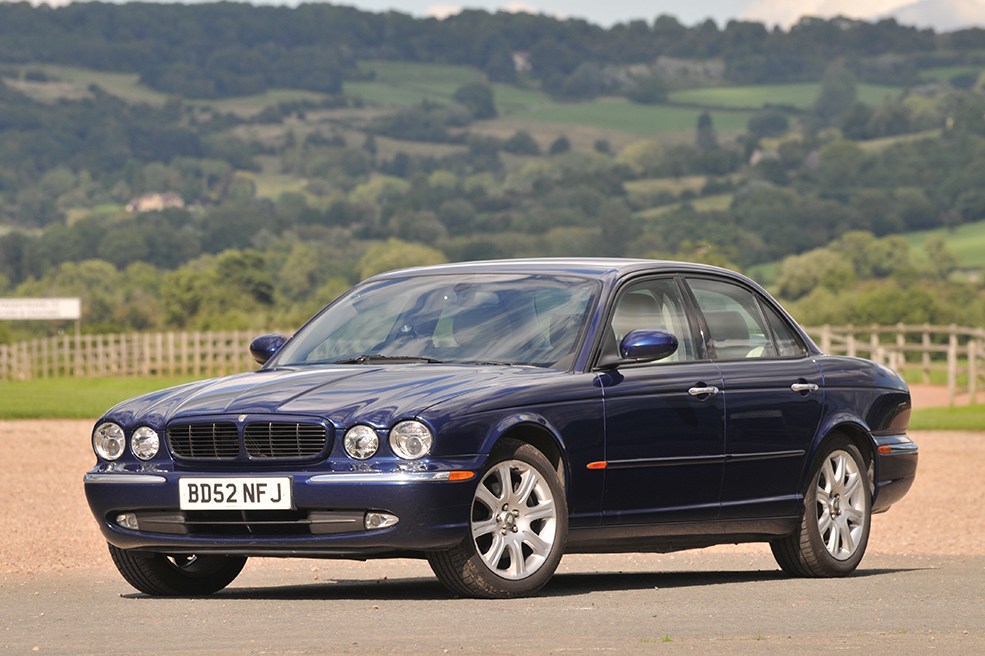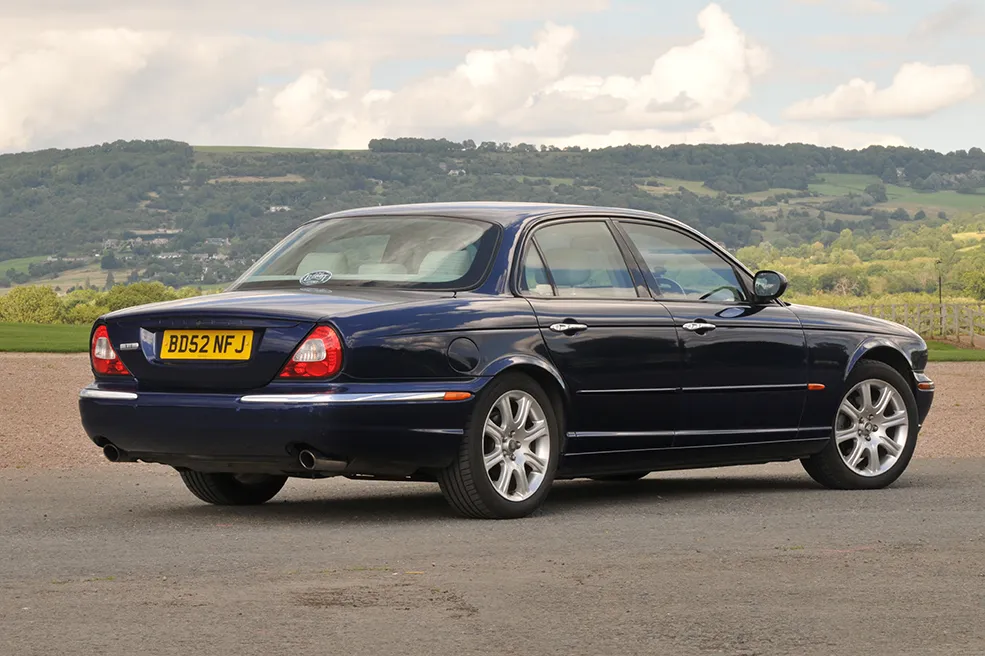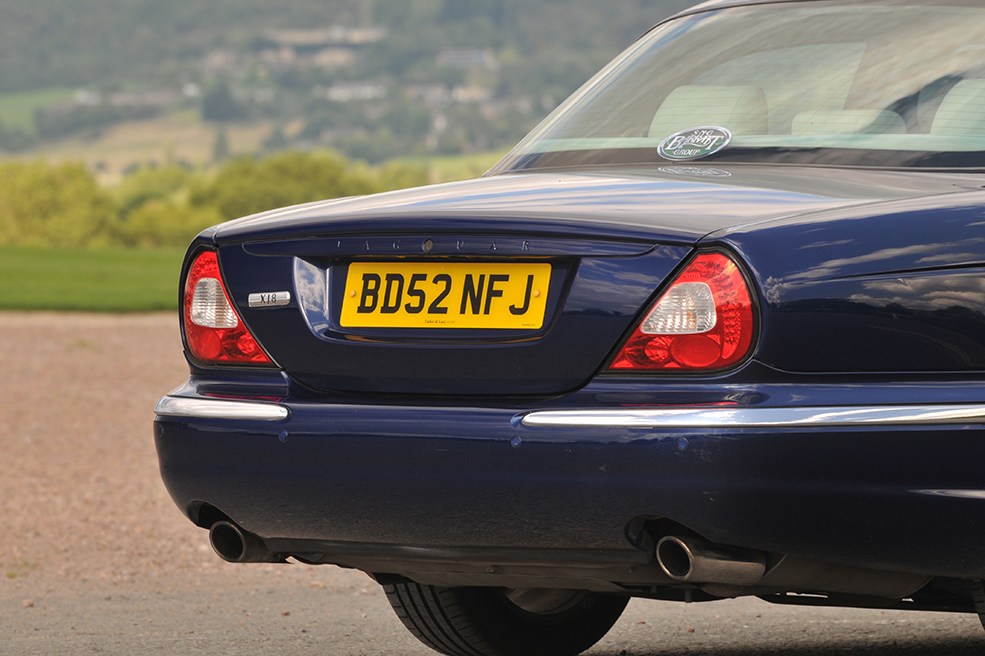

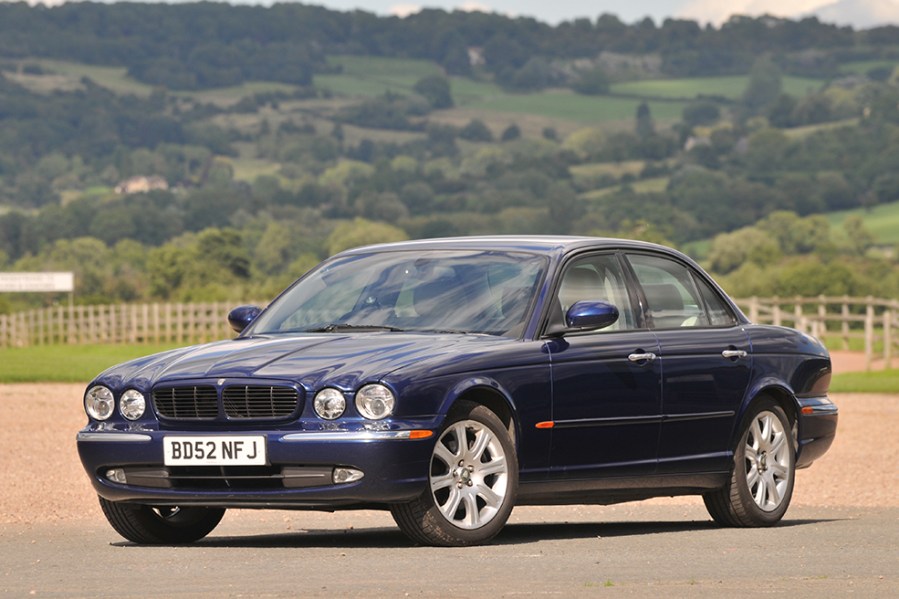
The traditionally styled X350-generation Jaguar XJ was surprisingly high-tech under the skin and remains a very useable modern classic
Although the seventh-generation XJ was launched in 2002, development of the car known inside Jaguar as the X350 had in fact begun much earlier, running in parallel with the X-Type. Unlike the Mondeo-based X-Type, the XJ boasted some radical technology beneath its somewhat conservative style.
Demands for increased interior space meant it would need to be larger than its XJ40-based predecessor, which required a wheelbase stretch to 3034mm but in order to avoid the weight ballooning as a result, the decision was taken to go with a lightweight aluminium construction. Back then, this was a bold step, only Audi having successfully volume-produced an aluminium monocoque saloon car, but with Ford money behind it, the Jaguar team managed it.
Unlike Audi and Honda’s use of extruded spaceframes, Jaguar went for a bonded and riveted construction, involving the high-tech glue being cured by the heat of the paint oven. It was immensely strong, too: later figures quoted by Jaguar put torsional rigidity 60 per cent above the outgoing car while the structure itself was around 40 per cent lighter.
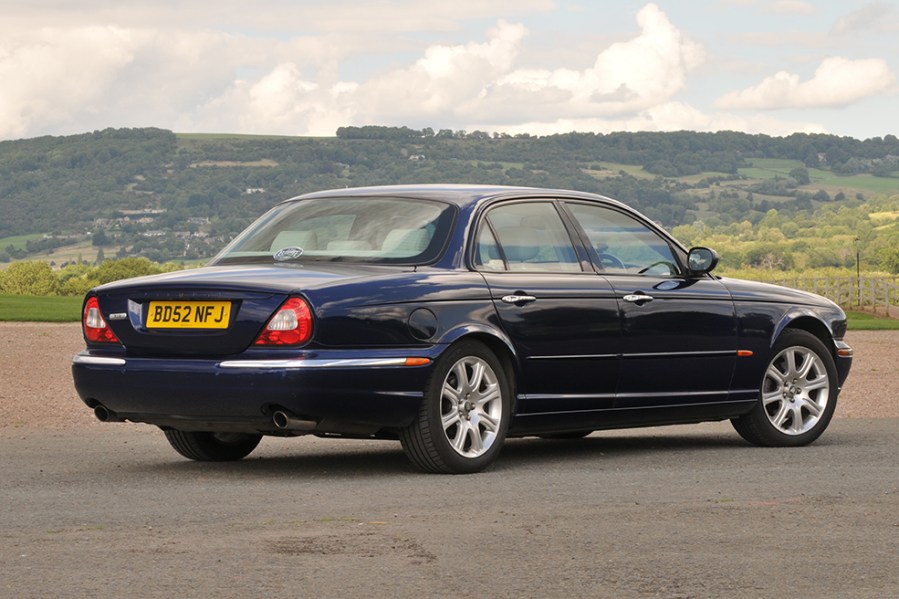
It wasn’t all good though. The different structural requirements of aluminium heavily influenced the appearance of the new car, with designer Fergus Pollock pointing out that the need to retain torsional stiffness resulted in larger than average pillars and a high waistline.
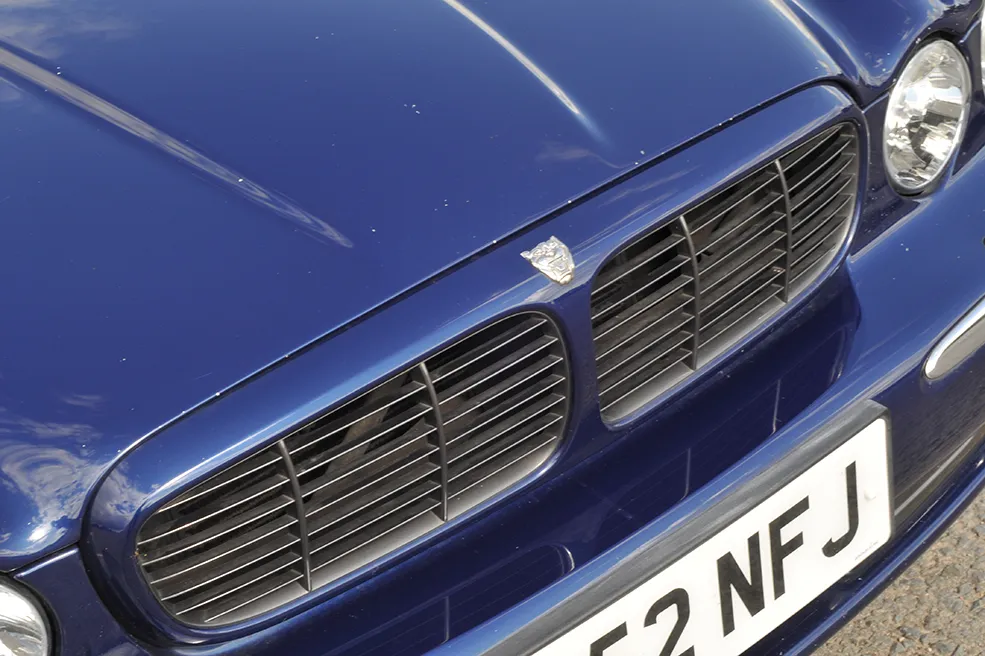
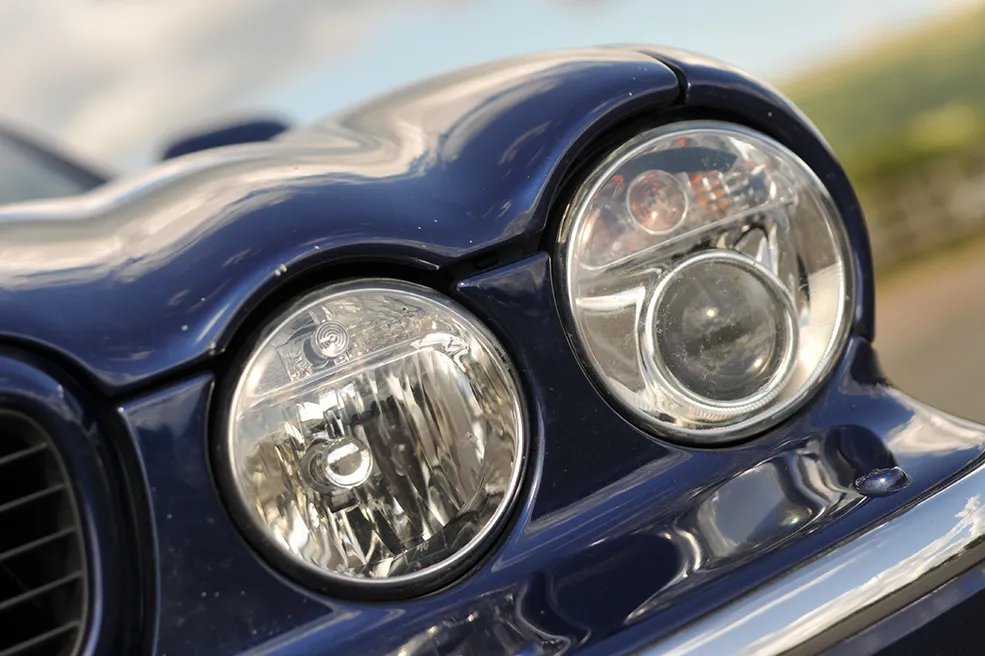
In his fascinating book Jaguar Design, former Jaguar designer Nick Hull also points out the rising feature line in the lower half of the rear doors which apparently helps to visually slim the sides of the car. Extensive customer clinics held by Ford meanwhile saw the adoption of the familiar Jaguar face with the sculpted four-lamp front end.
That conservative appearance rather disguised what a leap the X350 represented. It was larger and roomier than the old XJ, yet lighter, stiffer and fitted with air suspension all round. The result was a luxury saloon which could finally go toe-to-toe with the German opposition without needing excuses made for its dynamics, refinement or build quality.
There was an irony to that. Jaguar had spent heavily creating one of the most advanced cars in its history, only to wrap it in styling deliberately intended to reassure traditional XJ buyers. In period, that made it look conservative beside the BMW 7 Series, but two decades later, it is arguably part of the appeal: the X350 combines the appearance of an old-school Jaguar with engineering that still feels relatively modern.
Its importance also extended beyond this one generation. Jaguar’s aluminium production methods became central to later models, while the X351 which followed took the same basic philosophy and hid it beneath Ian Callum’s much more radical styling. In that sense the X350 was both the last traditional-looking XJ and the beginning of Jaguar’s modern aluminium era.
Values
The X350 is still one of the cheapest ways into a genuinely high-end luxury car, although the market is beginning to separate ordinary examples from the best V8s and sporting models. High-mileage 3.0-litre V6 and 2.7 TDVi cars can still appear around the £1500–2500 mark, but condition and history matter far more than saving the last few hundred pounds.
Around £3000–5000 is a more realistic budget for a presentable 3.0 or 4.2 with sensible mileage and evidence of proper maintenance. Exceptional low-mileage cars can go higher, while neglected examples with warning lights, tired suspension or patchy histories can quickly become false economies.
The XJR sits in a different part of the market. Good cars are typically in the £7000–10,000 region and the best low-mileage or special-edition examples can reach well into five figures. Daimler Super Eight models can command similarly strong money. Recent Classics World auction coverage has seen an X350 XJR sell for just over £9000, while ordinary XJ6 and TDVi examples can still turn up at the other end of the market around £1000–2000.
Always buy on condition, history and evidence that the expensive jobs have been done. A cheap X350 can be a wonderful bargain; a neglected one can remind you very quickly that it started life as a £50,000 luxury car.
Bodywork
Clearly this is one Jaguar where you don’t need to be worrying about rusting steel bodywork… but having said that, the aluminium construction comes with its own issues. Crash damage has to be repaired using a specific process so do check for signs of major accidents, while you may also find signs of reactive corrosion where the paint bubbles up in localised patches.
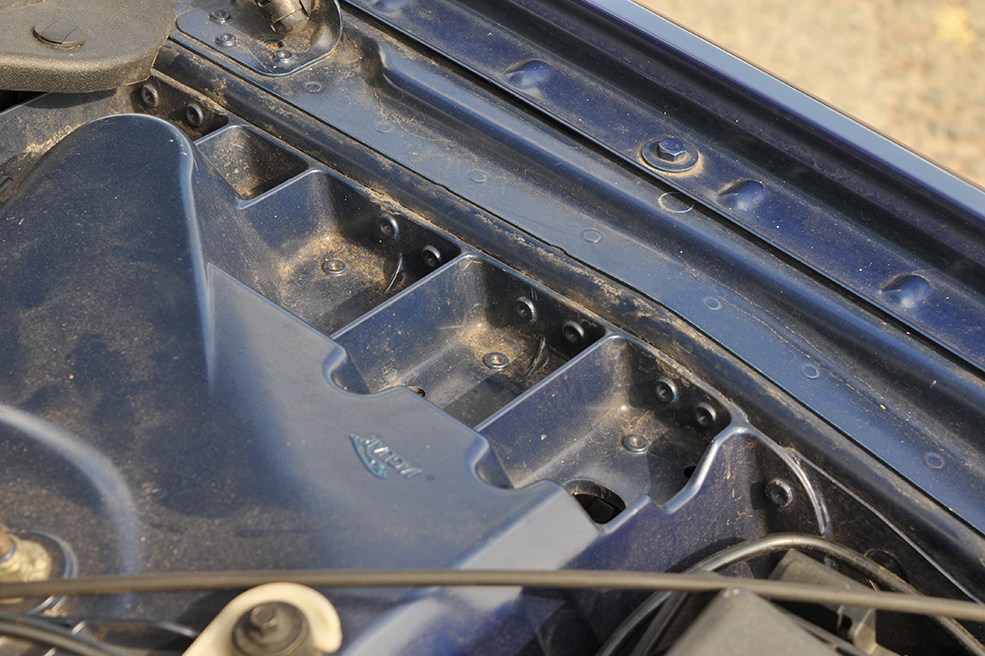
The front subframe is steel and can corrode, although this is difficult to check with the engine undertray in place. The aluminium outer panels are also more easily dented than their steel equivalents, making these cars more vulnerable to supermarket trolleys and careless car park door opening. Take a step back and look down the side for Peugeot 205-style rippled flanks.
Certain colours can also suffer with the paintwork fading at different rates on the bodywork and the plastic bumpers, but this can often be sorted with a ‘mopping’ session using a professional buffing wheel and compound. Like the X-Type and S-Type, the plastic outer headlight lenses can suffer with road debris and UV light and will become opaque, affecting light output noticeably. If caught in time, this can be polished out and if it’s too bad for normal T-Cut type polish, then one of the restoration kits will work. Failing that, have the bodyshop buff the lenses when they do the bumpers.
On pre-facelift models, the retaining insert for the headlight washers can fail, allowing the jet to fall inside the bumper, which will need to be removed to retrieve it.
Engine and transmission
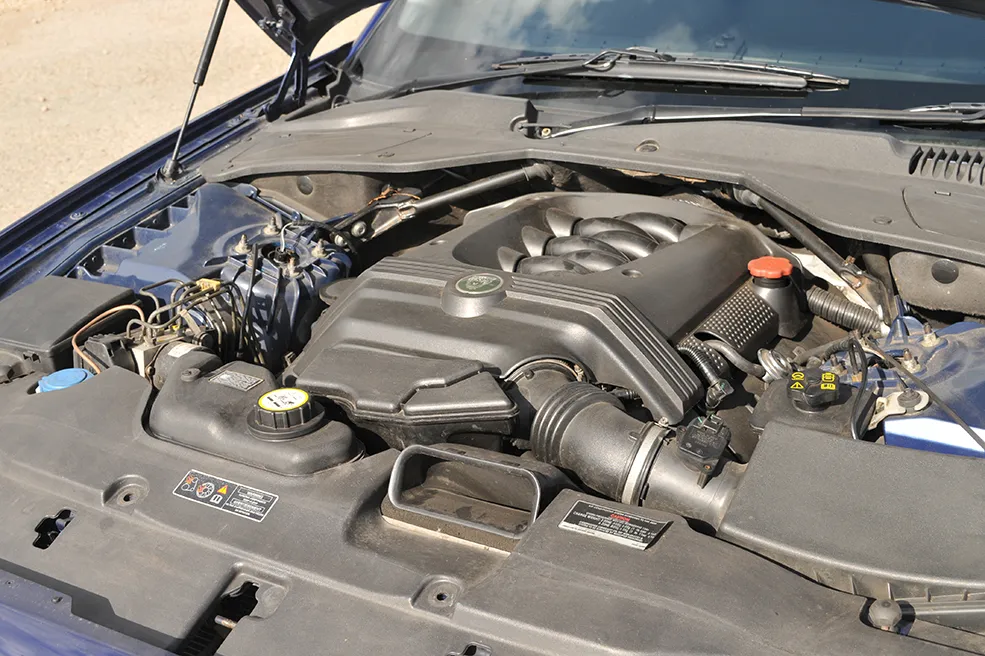
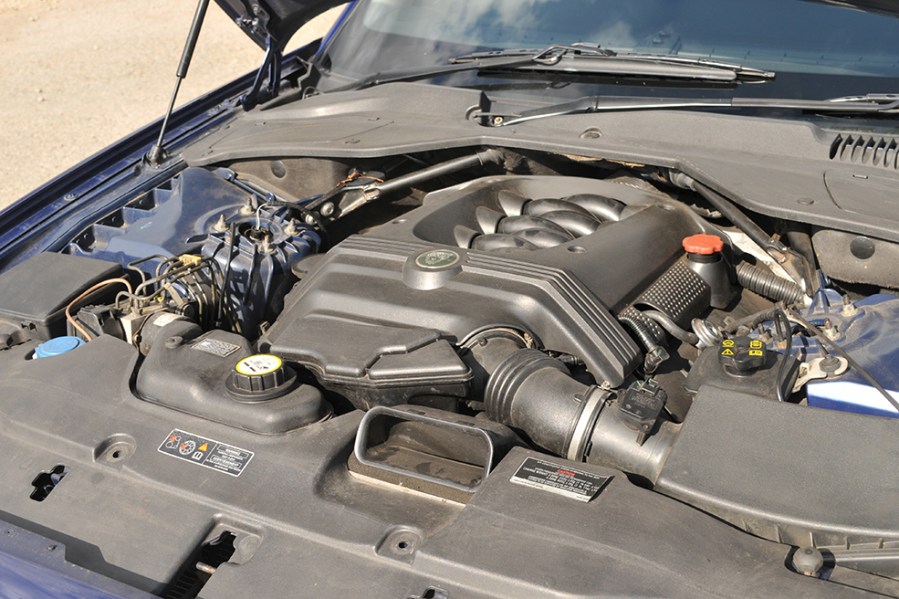
If it’s reliability you’re after then the petrol engines are the way to go. The V8 engines in the X350 are all the later 4.2-litre version of the AJ-V8 which is well regarded and really doesn’t have any Achilles’ heels. Knock sensors are known to fail, resulting in poor performance and economy and replacement on the V8 can be a DIY job but does involve removal of the inlet manifold.
The V6 is similarly reliable, being derived from the Ford unit and also found in the X-Type and S-Type. Oxygen sensors can often fail and can be hard work to remove, while other issues include oil leaks from the sump area and the crankshaft end seal, but both can be sorted easily enough. The V6s can also suffer with the radiator swelling at the bottom and it’s worth checking this before it lets go entirely.
The diesel on the other hand needs approaching with caution: specialists warn that overfilling the engine oil can cause back feeding of the turbo returns – where the engine will run on its own oil until it fails – and also hamfisted oil changes which see an incorrectly fitted filter damaging the non-return valve.
It’s also been suggested that these engines can suffer from main bearing failure from diluted or contaminated oil.
On the plus side, many specialists reckon the engine, which is also shared with the S-Type and Discovery, can be a good unit if it’s maintained correctly and there are many high-mileage examples around.
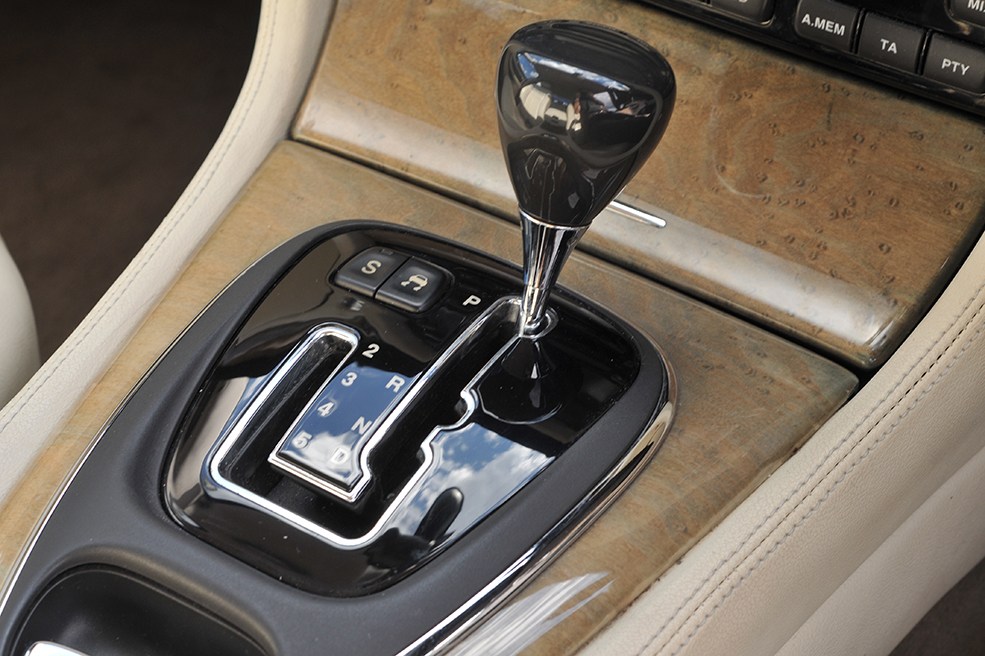
There was no manual option for the X350 generation and specialists suggest that the life of the six-speed ZF automatic can be usefully extended by changing the fluid every 60,000 miles and using the correct ZF Lifeguard oil and a new filter. This requires dropping the gearbox sump pan, but should the Torx bolts round off in the process, Jaguar supplies replacements with larger heads.
Oil leaks from the bottom of the gearbox can often be due to the sleeve where the electrical wiring enters but this can be swapped when changing the filter. Surging on a light throttle at 30-50mph can generally be cured by a control software update.
Suspension, steering and brakes
The front end uses twin-piston calipers, with sliding single-piston calipers at the rear, with the XJR using Brembo kit. Sticking calipers aren’t uncommon on little-used cars, but can either be freed off if you’re lucky or swapped with a reconditioned unit. The rear parking brake is electric and so the correct diagnostic tool is needed to perform a disc or pad replacement.
ABS problems are common and a failed sensor is a simple DIY job to swap. If that doesn’t cure the problem though, problems at the rear end are likely to be down to the reluctor ring on the driveshaft having corroded and swollen up so the sensor can no longer read the signal. The cure is a replacement halfshaft and it’s really a workshop job.
The air suspension gives a comfortable ride, although newcomers to the car may be surprised to find it slightly crashy when compared to something like a hydropneumatic Citroën.
As far as the air suspension goes, height sensors are a common failure but are straightforward DIY to change, whereas failed shock absorbers mean a replacement strut and can be expensive. The main air pump is another common fail point, while cars left standing for long periods can expose leaks or tired components when the suspension refuses to rise cleanly.
Elsewhere, the rear lower suspension arm bushes can wear, the solution being a complete lower arm which can be changed at home. Upper bushes can also wear on higher-mileage cars and again a complete arm is the solution.
A rattle from the bottom damper bush is a simpler fix and a tool is available to press the bushes in and out without removing the strut.
Movement or rattling felt while tapping the brakes sharply at low speeds can identify worn lower front arm bushes or failed anti-roll bar drop links. The drop links are a simple job, while the bushes can be changed a few times before the arm needs replacing but a new assembly with bush fitted is also available.
Wheel bearings are also a common failure. Complete hubs are available and can avoid the need for a press.
Interior and electrics
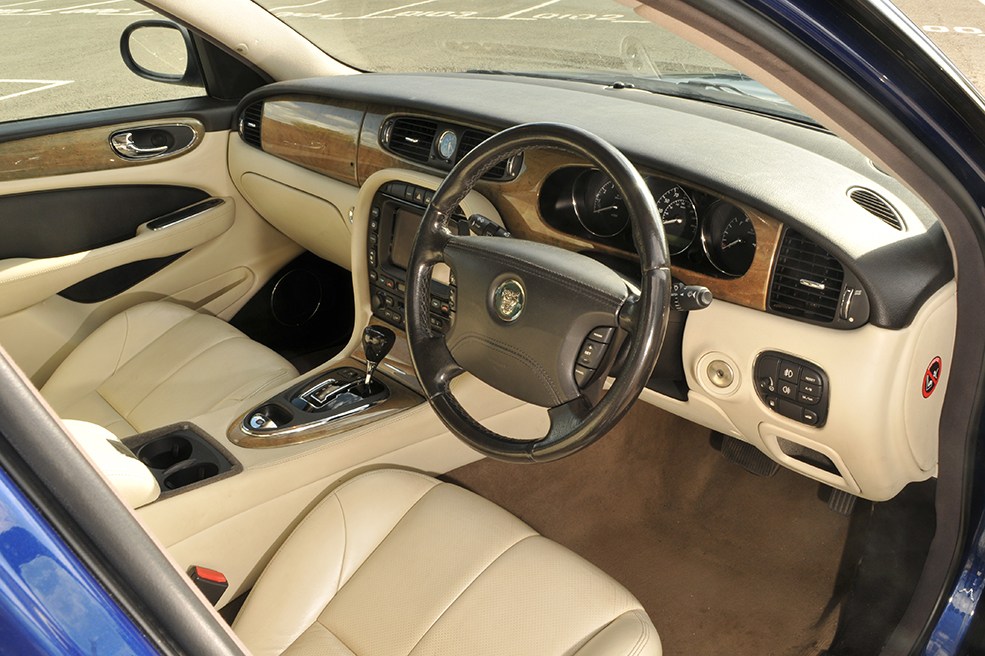
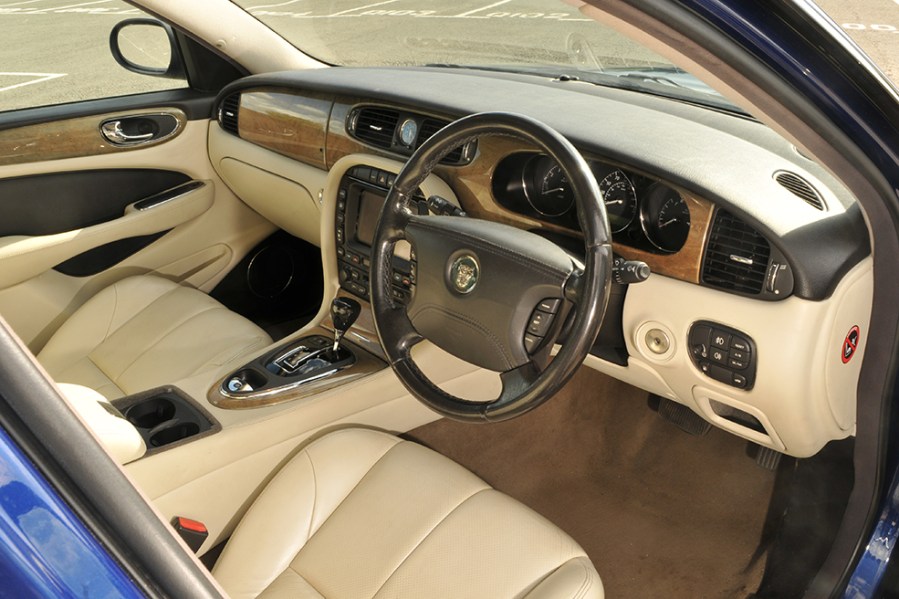
The trim and fittings in these cars is of high quality and other than the usual wear and tear to the seats it should last well. Tired-looking leather can be transformed by using one of the colour-matched leather recolouring kits as sold by firms like the Furniture Clinic.
The door locks and latches can be an issue and although the doors can still be operated manually, this can become more of an issue if the lock fails when it’s double-locked. The answer is to get it sorted as soon as the central locking starts to misbehave. While the door is apart, specialists recommend fitting a new window regulator as these are a common fail point.
One rather more major issue is the heating/air conditioning system. This has a dual-output option for separate temperatures on each side and if it starts to misbehave, expect some hassle. If you’re lucky, back-flushing the system might sort it out, but if not then a partial dismantling of the dash might be needed to access the heater matrix. Straightforward but a lot of fiddly labour.
If the heater fan starts to have a mind of its own then it’s down to the resistor pack which can be replaced.
Age is also catching up with some of the cabin trim and electronics. Sagging headlinings are increasingly common and the original infotainment, radio and navigation hardware can fail, so check that everything works rather than assuming it will be a simple fuse.
Verdict
It may have been the last of the traditional-looking Jaguars, but the significance of the X350 generation of XJ saloon both to the automotive industry in general and Jaguar in particular is hard to overstate. The aluminium construction which looked so radical at launch went on to become central to Jaguar’s engineering strategy.
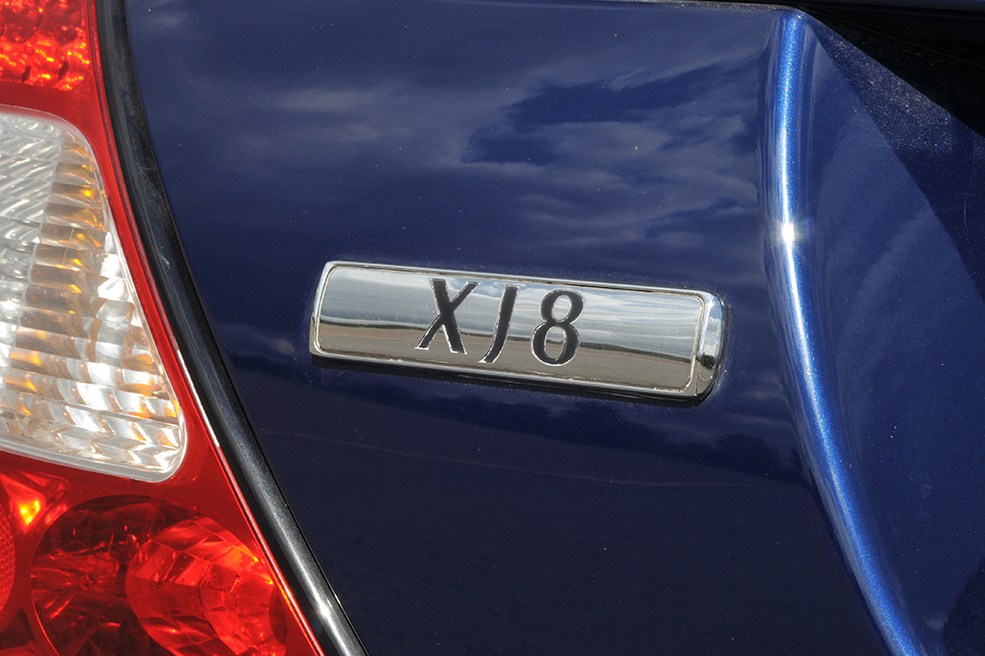
Classics World ran a 4.2-litre XJ8 project car for several years and it proved surprisingly DIY-friendly and dependable once the inevitable age-related niggles were sorted. There is also a huge amount of knowledge out there from clubs and independent Jaguar specialists who are now thoroughly familiar with the cars.
These were expensive cars new and in some respects – tyres, suspension components and complex electronics for example – they still carry the running costs of a £50,000 car. You can’t expect to run one on a shoestring, but the flip side is that they remain astonishingly capable for the money. Driven gently, even the 4.2-litre V8 can return surprisingly respectable economy on a long run.
The diesel remains tempting for high-mileage use but its patchier reliability record means history is crucial. For many buyers the petrol V6 or, better still, the 4.2-litre V8 is the safer and more characterful choice. Buy carefully and the X350 delivers something increasingly rare: old-school Jaguar atmosphere, modern-road usability and genuine technical interest in one car. It may still be cheap, but the best examples are no longer simply used luxury cars – they are modern classics in their own right.
Timeline
2002
X350 unveiled at the Paris Motor Show in September; production begins at the end of the year.
2003
First customer deliveries begin in spring with 3.0-litre V6, 3.5- and 4.2-litre V8s, including the supercharged XJR.
2005
Long-wheelbase model added with a five-inch stretch to the rear doors. The 2.7 TDVi diesel and Daimler Super Eight broaden the range.
2007
Facelifted X358 introduced for the 2008 model year with revised grille, bumpers, mirrors and front-wing vents; the 3.5 V8 is dropped from the UK range.
2009
X350/X358 production ends after 83,518 cars, making way for the radically styled X351 generation.