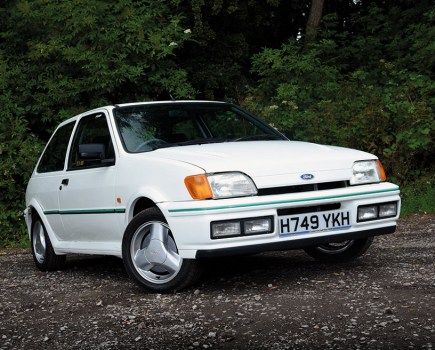


The original Vauxhall Astra Mk1 of 1980 represented a new beginning for the company in the family hatchback segment
The Astra was a very significant car for Vauxhall, not least because it was the marque’s first front-wheel drive car. In actual fact it had been designed in Germany and was simply a rebadged Opel Kadett. When first launched in 1980 it was imported from Germany too, although production was moved to Ellesmere Port in November 1981. It effectively replaced the Vauxhall Viva HC in the C-segment of the market and from 1980-1984 competed against the likes of Fiat’s Strada, Volkswagen’s Golf and the Mk3 Ford Escort.
Entry point was a 1200 with an OHV Opel engine that could trace its lineage back to 1962, but the engine of choice was the new OHC unit with an alloy head and hydraulic valve lifters. This was available initially as a 1300 unit, but 1600 versions were quickly added to the mix, while an 1800 with fuel injection was offered in the GTE from 1983. One memorable advertising strapline for this was: ‘Nought to naughty in 8.5 secs.’ There was also a diesel option in the saloons and estates from 1982, while the sporty SR and GTE variants were offered with five speeds in their gearboxes.
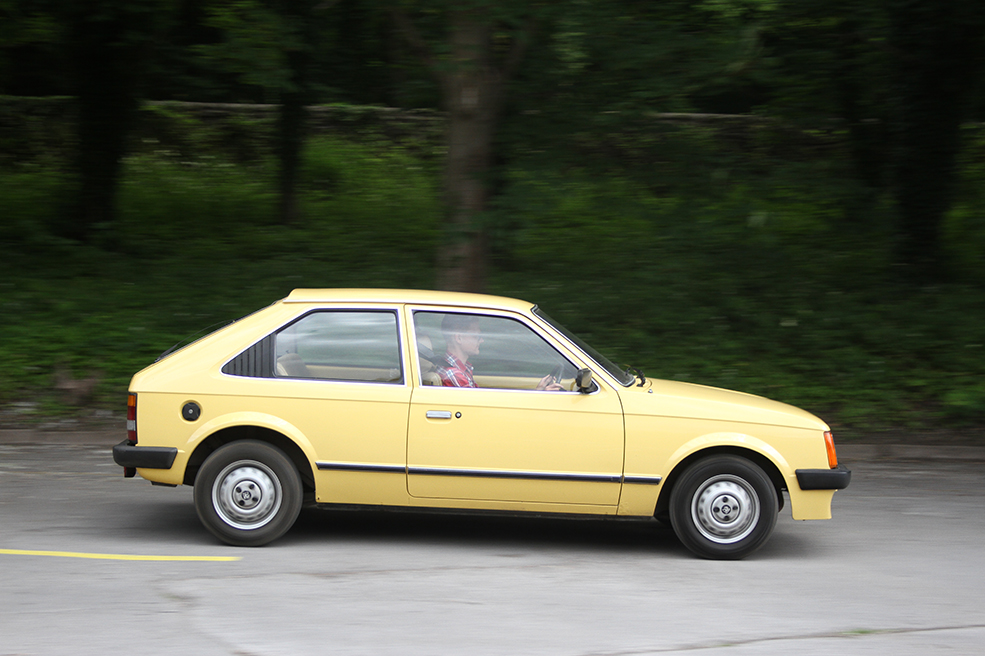
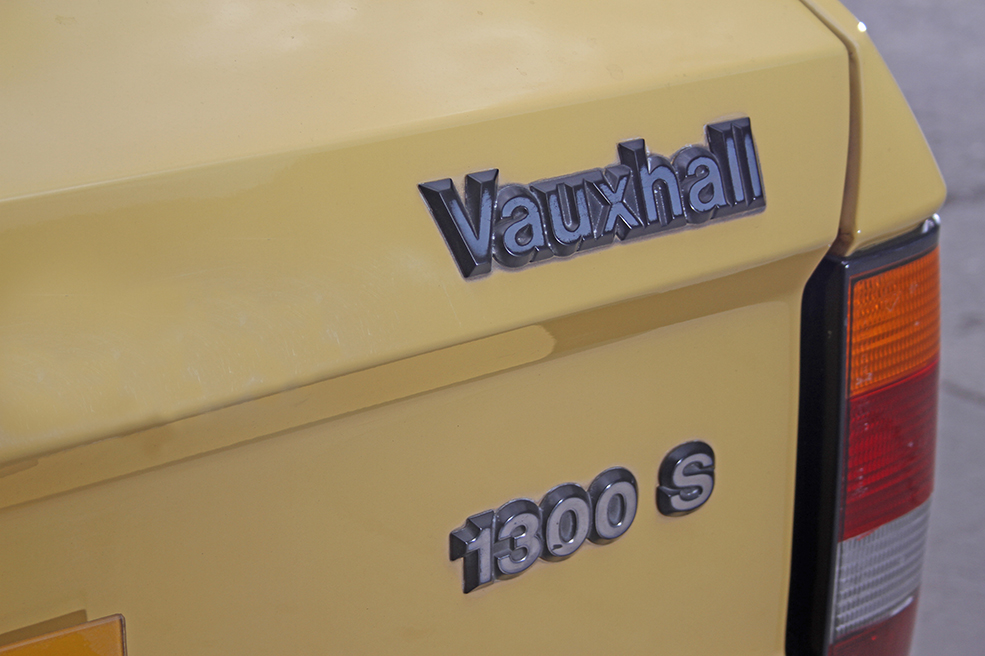
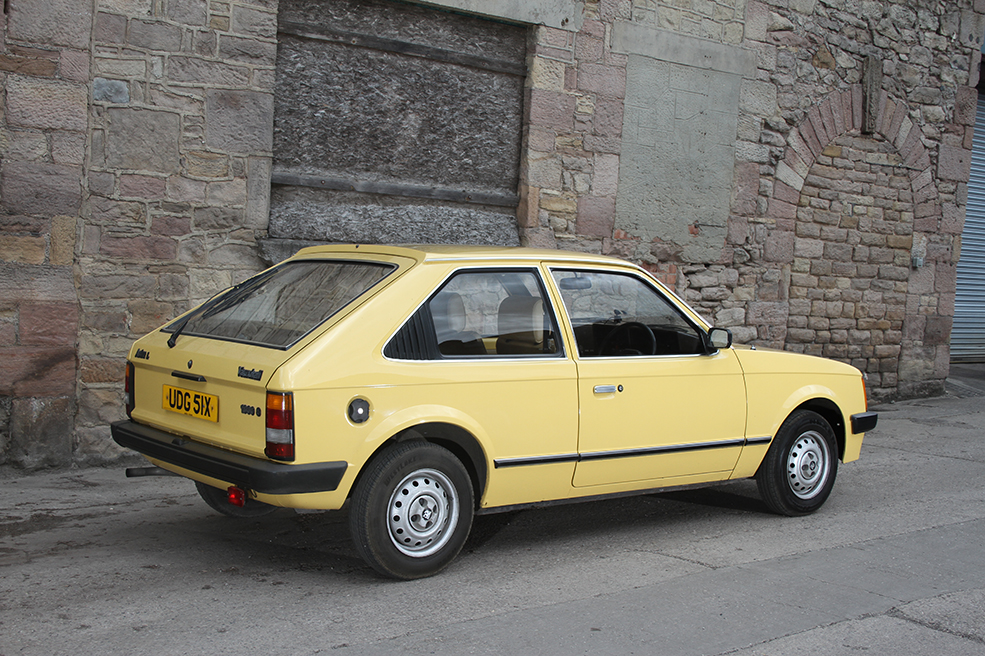
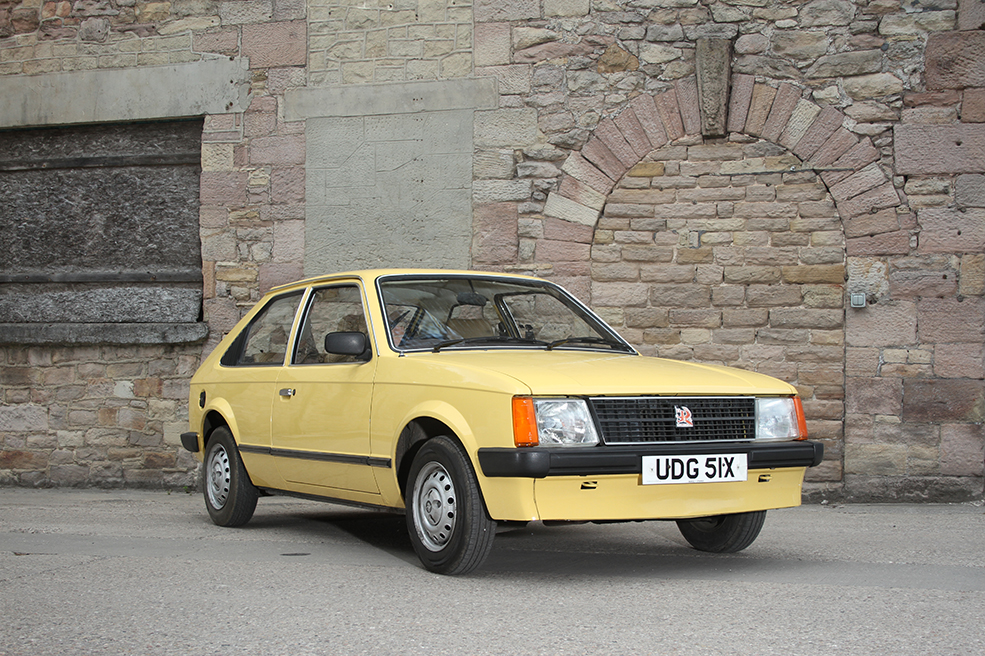
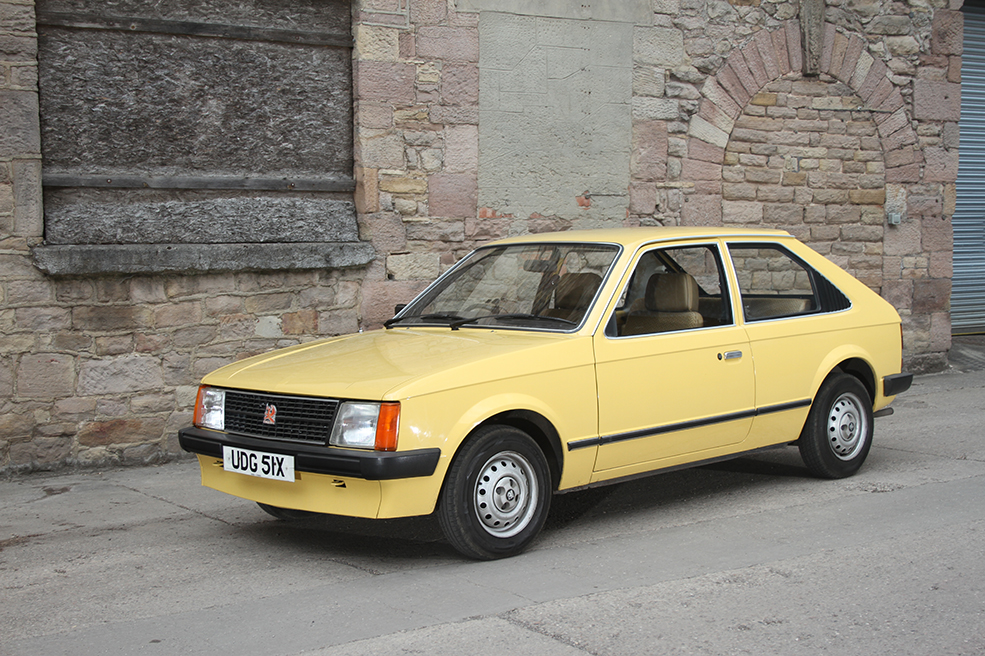
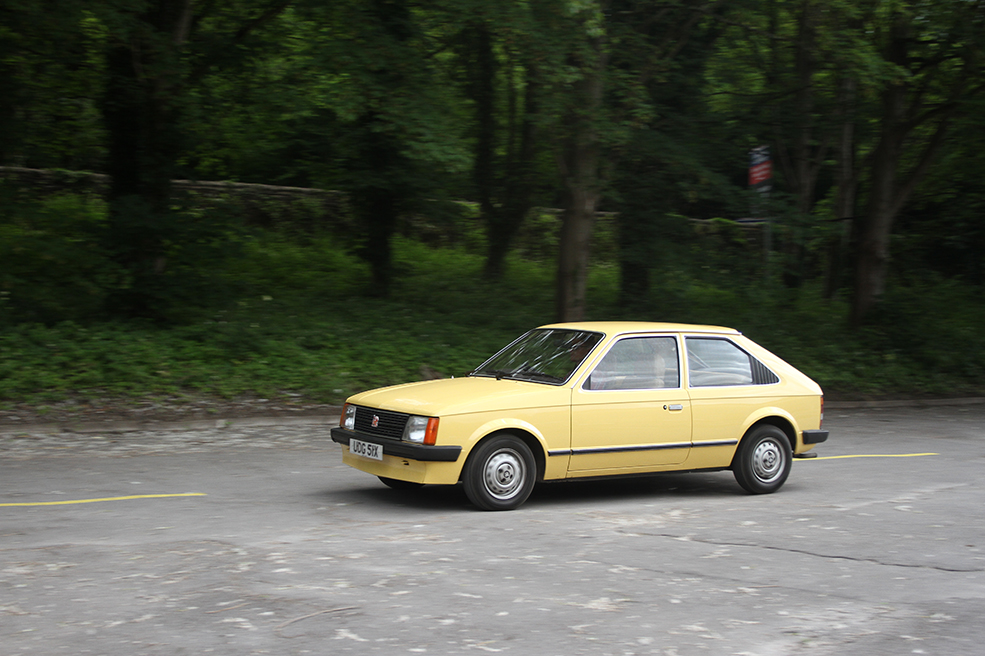
There were hatchback, saloon and estate options, as well as a choice of two or four side doors, and even a Bedford van from the 1983 model year. The Mk1 Astra was replaced by the restyled Mk2 in October 1984. The car we have on test is an early 1981 Vauxhall Astra L 1300S, one of those built in Germany before Astra production at Ellesmere Port was up and running.
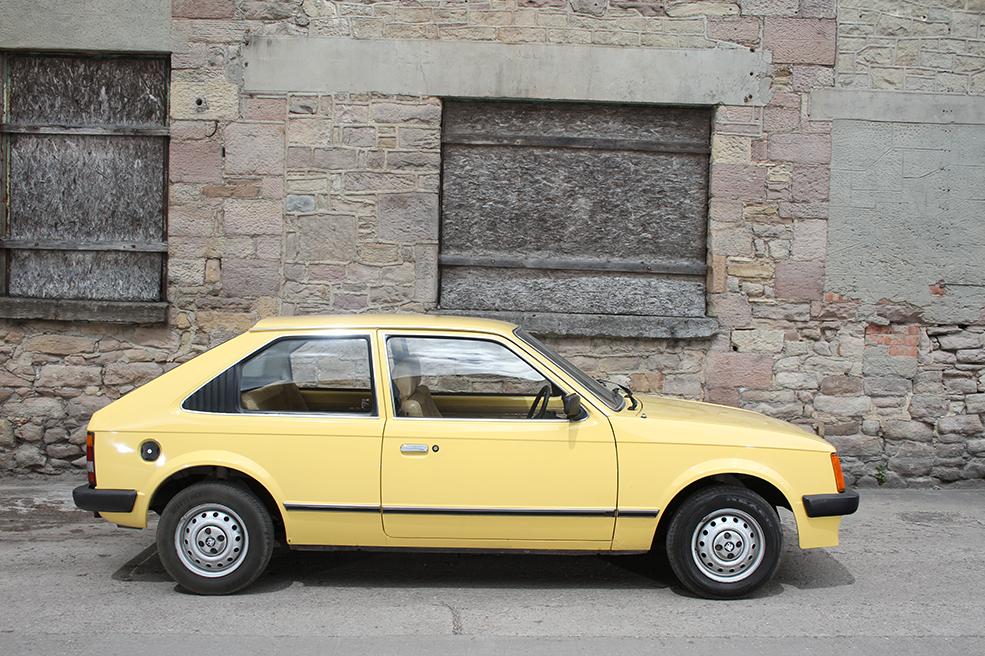
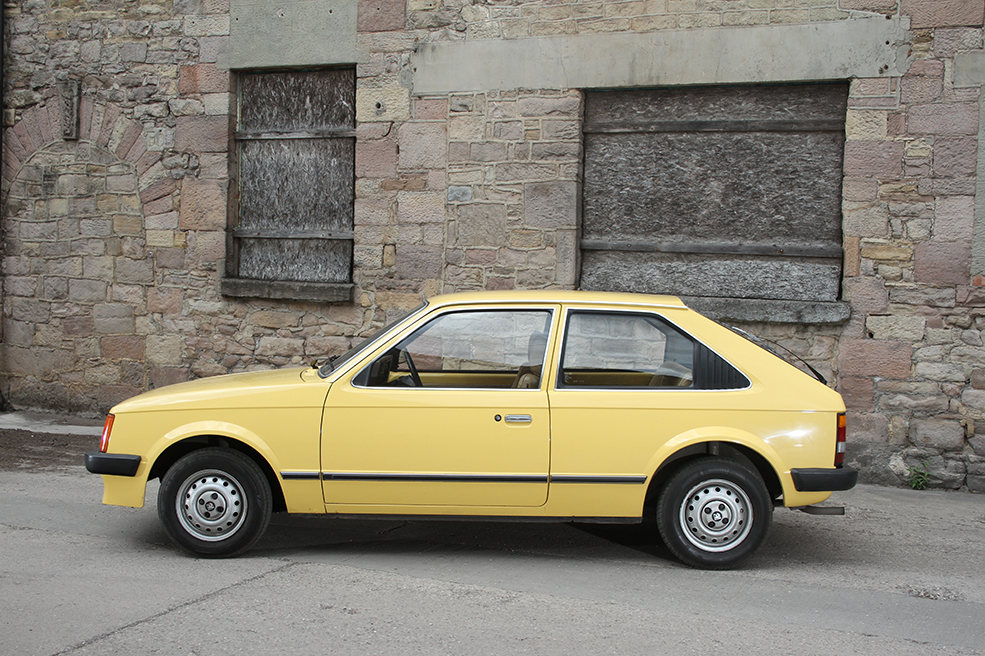
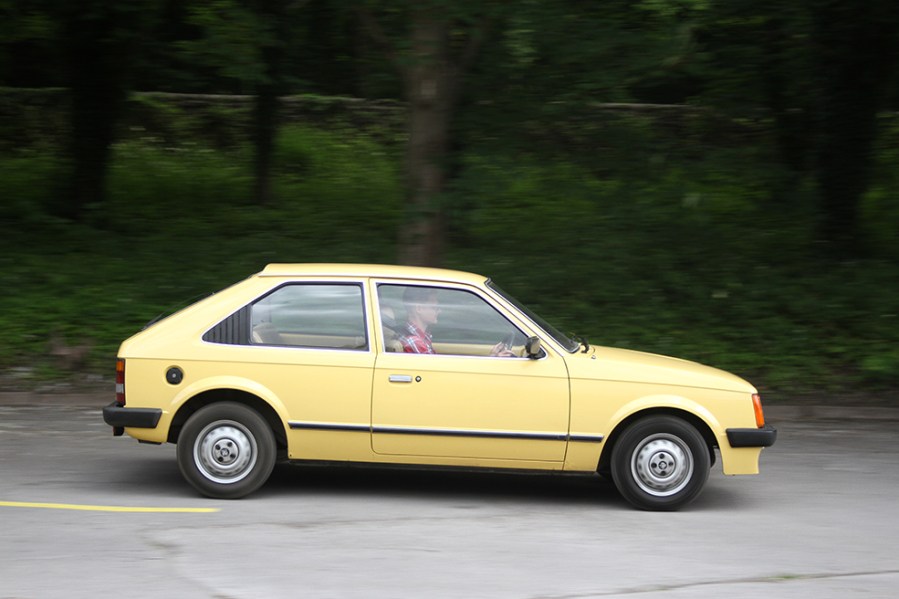
As you approach the Astra, it is very much of its era in some ways, but the profile with that deep front air dam and little kick up of a spoiler at the back of the roof is hard to mistake for anything else. As befits the 1980s, there is very little in the way of chrome decoration. The badges add a little brightwork, but the bumpers are black and there are black trim strips down the sides. There are some stainless steel trims around the windows and on the gutter rail though, so there is still a little bit of bling.
The Mk1 Astra only had a short four-year production run before being restyled into the Mk2 so it must have dated quickly at the time, but to my eyes its lines have aged really well. I can imagine it looked rather plain and boxy when new, but it is beautifully proportioned and lightly detailed. There are a couple of deep swage lines down its flanks, one below the windows and another above the rubbing strips. The arches are flared out quite nicely to give it a little bit of attitude, and although the bonnet is reasonably flat, it does dip a little across the middle. The headlights are quite square, but they are given just enough extra style and presence by sloping inwards at the bottom on their inner edges, meaning they just miss being blocky.
The wheels are on 155/80-13 tyres, so pretty much standard for the day but small and tall by today’s standards. There are nice little grooves on the sides of the car behind the rear windows, which may even be functional in terms of ventilation. You’ll find only two doors on this car, but they are nice and wide with the B-pillars set well back behind the front seats.
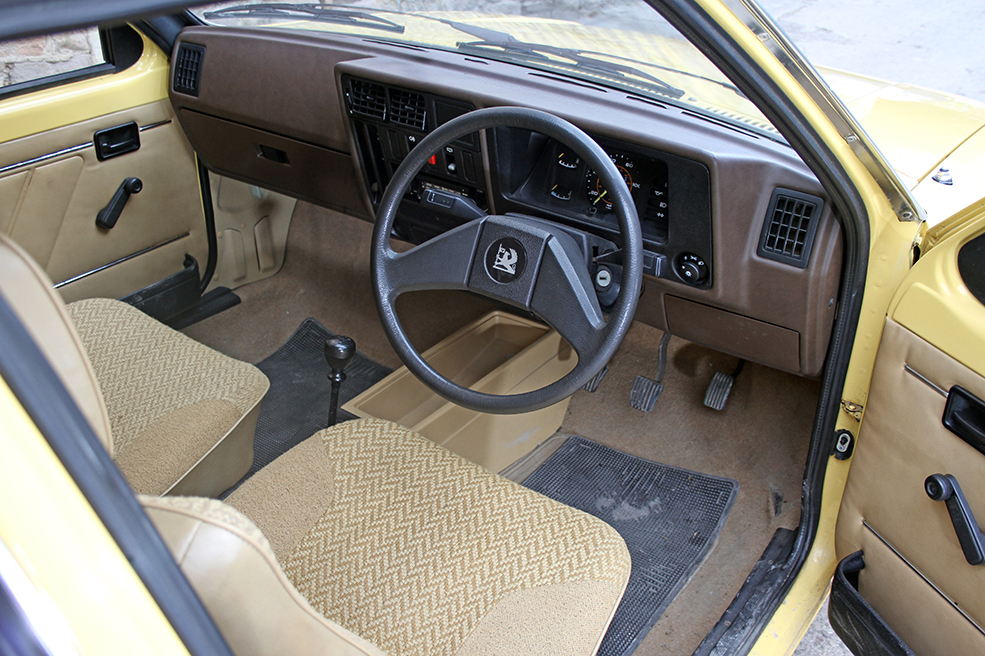
Those seats are a lovely biscuit colour, vinyl on the backs and cloth on the seating faces. I don’t mean this as an insult when I say the cloth sections look like they have been knitted at home. If you saw them in the flesh you’d realise what I mean, but they are overall very light and pleasant, just with slightly more texture than you might expect.
Getting into the back does require a little bit of dexterity, but once you are in there are no seat belts. There is loads of room for two, and space for three at a pinch. As usual for this age of car the waistline is horizontal rather than sloping so visibility out is good despite the reasonably chunky front headrests, so good in fact that I doubt even I would get travel sick in the back.

The front passenger gets lots of leg room, more than enough to stretch their legs. There is a lovely feeling of space despite the fact that this is a relatively small car thanks to the low transmission tunnel and the way the dash is both plain and sited well forwards below the screen. No air bags of course, so a nice deep glove box ahead of you. There is also plenty of head room.
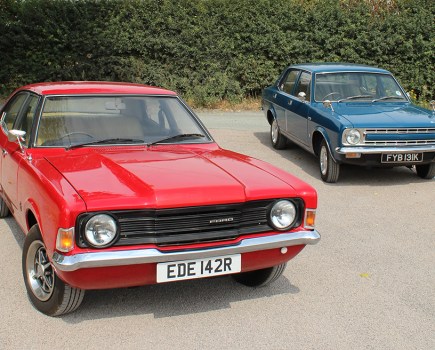
On the driver’s side, this is 1980s motoring, economy style. Well, maybe not total economy, perhaps more like 1980s motoring on a real-world budget. The dash slopes down and away from you, but not as dramatically as it does on something like the early Mk3 Cortinas. You’ve got a large square section in the middle that has the air vents, ash tray, fog lights, hazards, radio and heater sliders. There is a space that I would guess was filled by a clock on the more expensive versions, and a little cubby ahead of the gearstick. Dead ahead of the driver and once again sloping down at the bottom you have a rectangular binnacle containing fuel and temperature on the left, speedo in the middle (up to 120mph and currently reading 46,893 miles), and then to the right a little cluster of warning lights for ignition, oil, handbrake, main beam and direction indicators. Further down to the right is the light switch – turn for side lights and dip as you would expect, but you can also pull it out to switch on the interior light. The stalks are big and chunky, indicators on the left and wipers on the right.
The steering wheel is a decent size, but not huge. There is a large centre boss and two spokes that slope down, so you have prefect view of all the instruments. The seats are firm but fair, nicely shaped around the back to give you a modicum of grip. The view out is great, but there is no passenger door mirror which was no doubt still an optional extra at this time, or reserved for higher spec models.
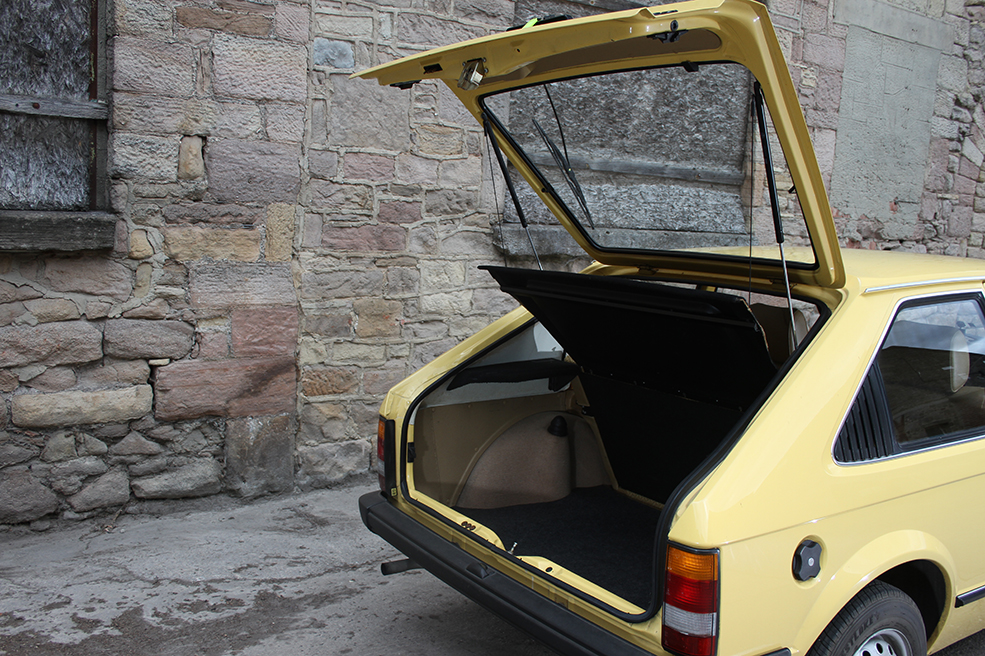
At the rear, the hatchback contains a large window that slopes down low, and with a rear seat back that is also low, visibility in that direction is good too. That rear seat folds down too which can expand what is already a decent sized boot, so all in all this is an extremely practical car. The question is, can it also be fun to drive?
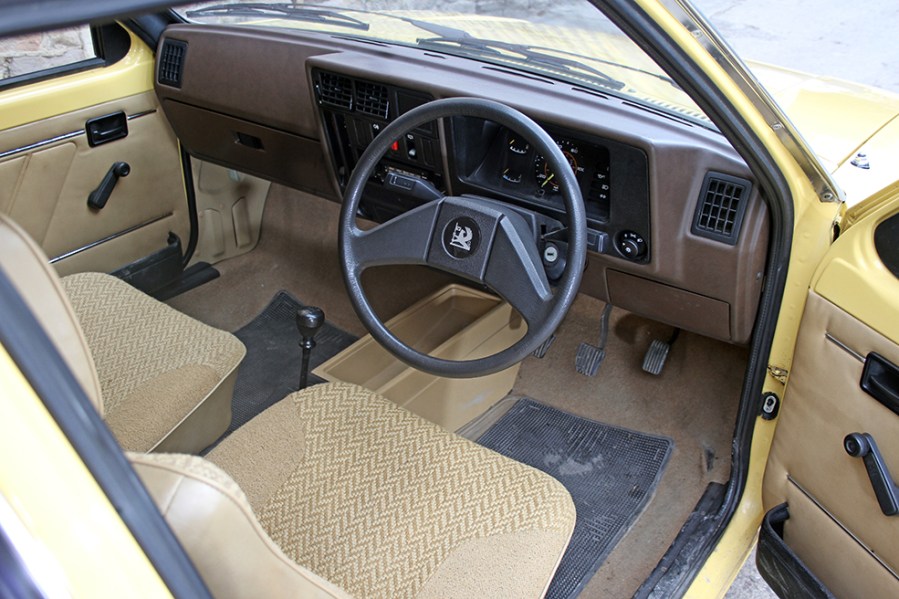
There are inertia reel seat belts in the front on a car of this age, with nice little brackets to hold them up when not in use, so nothing to scare the classic novice there. They will have to adjust to a four-speed gearbox though, which in typical Vauxhall fashion requires you to lift up a release mechanism before you can slot it into reverse. There is spring-loading on the gear stick which is surprising given the lack of a fifth gear, but it has the stick resting naturally in the third-fourth plane. It is only lightly sprung, but it is surprising how much we have become used to this and how much more natural it can make the car feel.
The clutch is nice and progressive, biting perfectly halfway through its travel. The Astra feels quite sprightly in the lower gears, though you can be up in third from 20mph if you are driving gently. That takes care of town driving quite happily, with good synchromesh making each change a smooth delight. And at these low speeds the steering feels so light that I have to check under the bonnet to make sure there is indeed no power steering as I had assumed. There is not, so the lightness is no doubt explained by the generous four turns from lock to lock – the turning circle is quite tight, but there is plenty of arm twirling to make the most of it.
The Astra is very impressive at these kinds of speed, just a little rattling as we go over rough surfaces coming perhaps from the load cover in the back, but don’t forget that this is a completely empty car today with just the one occupant. No doubt it would settle down more with a little extra weight on board, though that might blunt the performance slightly too.
There is not a ton of torque, so while the lightly loaded car will pull happily from low speeds, if you are pressing on then you can and do hold onto each gear for longer. That is only as you would expect, and it never feels as though you have to thrash the engine to get a hustle on. Interestingly, our Astra expert Mark Jones confirms that this is also true at motorway speeds.
‘I have a Mk1 GTE that’s completely standard, one that is heavily modified, and also a Mk1 Astra van 1.6,’ he told us. ‘My van is a real poverty spec – vinyl seats, no cigarette lighter, not even a HRW! I don’t suppose it is vastly different in performance terms to your 1300S Astra L – the L refers to the trim level, while the S denotes a high-compression version of the engine. My van also has the four-speed gearbox, and I had assumed I would have to swap it for a five-speed unit right away, but it has turned out to be really capable sitting at 70mph without over-revving the engine. Somehow it is nippy as well as long-legged, so Vauxhall must really have chosen a good set of ratios.
‘Through towns and villages third gear is fine, but still with enough power to pull away just by putting your foot down when you reach the national limit. The sportier versions are obviously quicker, but the 1300s are quite capable of keeping up with modern traffic. I suppose you might well notice the difference with a 1200 though.’
As well as the gearbox and the steering, I am impressed with how the pedals are nicely centred, the front wheels (and hence the wheelarch intrusion into the cabin) being set well forwards without the offset you often get on a smallish car. In this regard and in many others, the Astra reminds me very much of my own Triumph Acclaim. Partly this is down to the preponderance of squared trim and brown plastic inside the cabin, but the similarities go deeper than that (as you might expect given that they are from the same era) because the Astra is every bit as light and effortless to drive as the Acclaim. Having said that, there is a pared-down quality to the Astra when compared to the Acclaim, with painted door tops for example rather than full trim panels and no trim on the B-posts. Don’t get me wrong because there is absolutely nothing wrong with anything in the cabin, it just lacks a little flair. And I do like the seats now that I am getting used to them!
Overall, it is certainly a car that you could just jump in and drive even if you had no classic experience and still feel perfectly at home. You don’t need all those modern electronic driving aids because the power is nicely matched to the suspension’s capabilities. In fact I would suspect that the suspension could take a lot more power, and Mark can confirm that is the case from his experience with other models higher up the food chain.
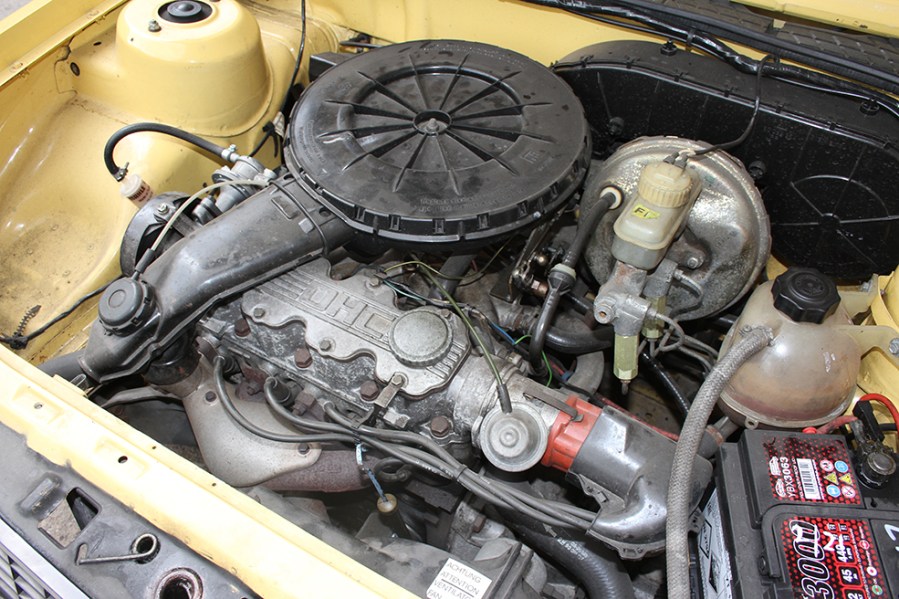
Looking under the bonnet , I can see that the brakes are a split system with a servo. There is plenty of room for access suggesting that maintenance should be straightforward despite the east-west layout and FWD. There is OHC emblazoned proudly on top of the engine. Very neatly designed engine bay with nothing fancy but everything being very practical. Perhaps that sums up this car best of all? The bright and jaunty colour helps to give it a more cheerful look and works well against the black trim, but overall it is the practicality of the car that really appeals to me. And no, that is not damning it with faint praise because I really do rate that very highly in a car. You could use the Astra every day, get the whole family in and run it on a relative shoestring, both in its time and today.
This is a perfect example of why cars of this era are such great classics for regular use – you can get in and drive it with the minimum of mental adjustment, you can treat it as a regular car but it still looks special. Perhaps spare parts might be more of an issue, although these days you can struggle to get bits for even the newest of vehicles. I would have one quite happily. I’d always thought I would like a Viva, but the difference between one of those (even and HC) and the Astra is vast. If I could have only one car, it would be the Astra. If it was to be a second car as a toy, then I guess it depends more on which era speaks more loudly in your ear – the 1970s or the 1980s.