
Here’s our pick of the best – or at least the most memorable – concepts from a time when US carmakers loved to make a statement
Words and images: Richard Heseltine
Curtiss-Wright Model 2500 Air-Car
When is a car not a car? When it’s a hovercraft. Strictly speaking, this improbable device was classed as a ‘four-passenger commercial vehicle’, which is suitably ambiguous. It may have resembled a biscuit tin, but this was a serious project; one that for a brief period was a media darling. The Air-Car – or GEM (Ground Effects Machine) – was conceived in 1958 by the Curtis-Wright Corporation of Wood Ridge, New Jersey, with military applications in mind. However, the firm’s board hoped that it would be adopted by the general public over time.
The ‘car’ pictured here caused a furore when first seen in 1960. The Model 2500 was powered by two 180bhp Lycoming engines – one mounted up front, the other behind the passenger compartment. Each unit drove (via reduction gears) a single four-bladed fan housed within a plenum chamber. These chambers created a cushion of air up to 381mm (15in) thick. Forward momentum was supplied by air bled from the chambers, which was then dispelled at low speeds via a row of louvres sited along the car’s flanks.
Its makers claimed that the Air-Car could traverse any surface while offering a magic-carpet-like ride. The downside was a top speed of a dizzying 38mph. The project was quietly shelved in 1961.

Chrysler Turboflite
There was a time – several decades even – when some major manufacturers considered gas turbines to be the propulsion unit of the future. With the possible exception of Britain’s Rover, few outfits invested more in adapting these powerplants for road-going vehicles than Chrysler. The Turboflite was created when the firm’s designers and engineers were at their most starry-eyed, when anything seemed possible. It’s just that not all was quite as it appeared.
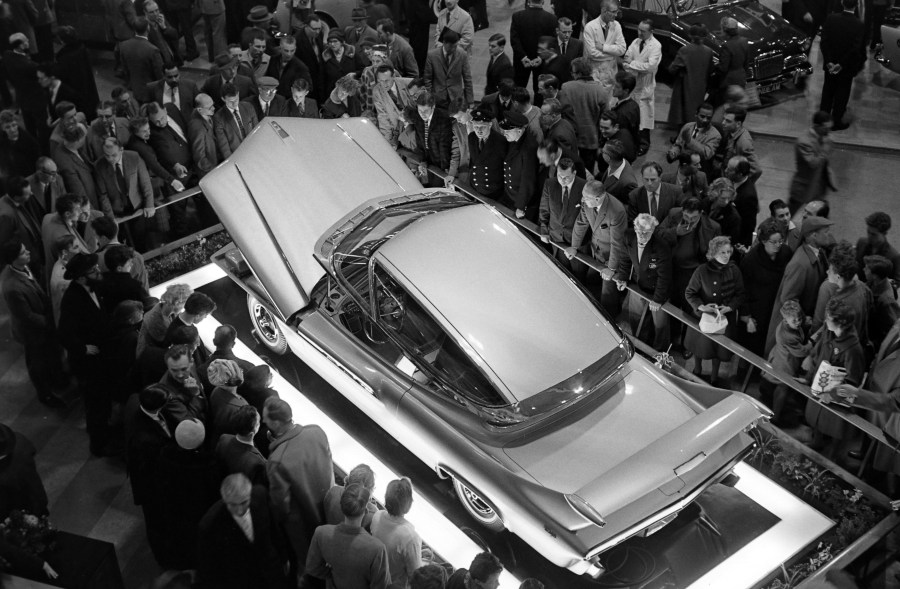
The Turboflite was the last show car created under the direction of design chief Virgil Exner. However, it was styled by Jack Kenitz within the new Advanced Studio, and it looked unlike any other car in the model range. In fact, it looked unlike any other car… period. For starters, it featured a green-tinted, aircraft-like canopy, while the rear of this show queen was dominated by a huge rear wing. Between the fins was a ‘deceleration air-flap’ that pivoted up into the airstream when the brakes were applied.
Propulsion was allegedly provided by an experimental ‘CR2A’ gas turbine unit that generated 140bhp at 39,000rpm. It was smaller and lighter than a regular V8 and comprised 80 per cent fewer parts (nor did it require a liquid cooling system). There was, however, one small wrinkle: much of this was poor hokum. The Ghia-built Turboflite was a non-functioning ‘pushmobile’.
Chevrolet XP-755 (Mako Shark)
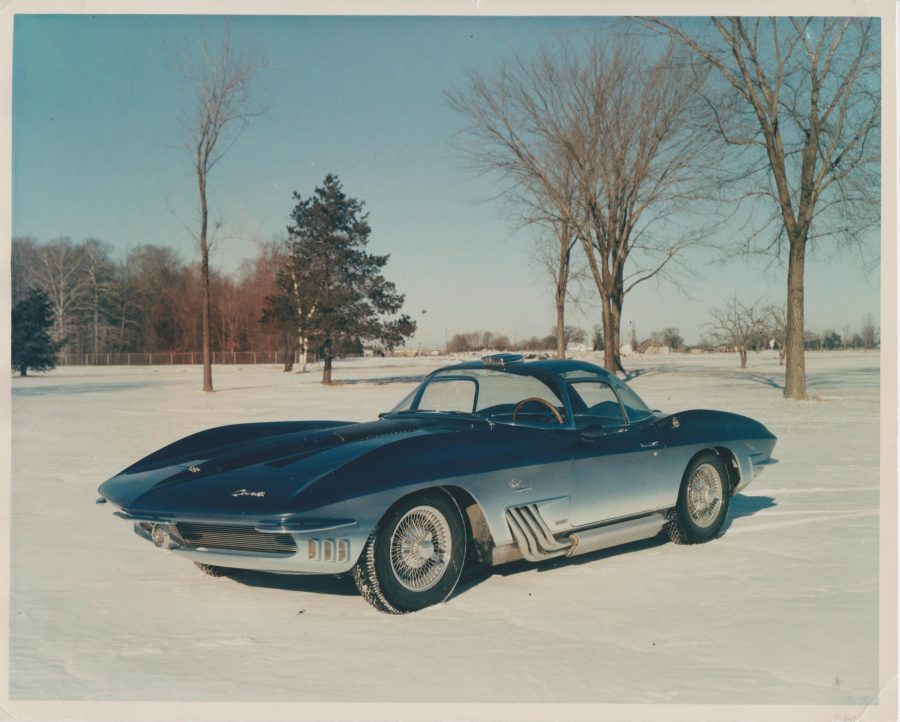
One of the great American concept cars, the XP-755 – aka the Mako Shark – was styled by Larry Shinoda under the direction of Bill Mitchell. The outline was, to some extent, inspired by the latter’s prior XP-87 racer, and featured elements that foretold the soon-to-be-released C2-series Corvette production car. The rear-end treatment, meanwhile, echoed that of the regular 1961 Corvette.
The car was subsequently reworked and appeared as the Mako Shark at the 1962 International Automobile Show. In this form, it lost its ‘double-bubble’ Lexan roof, while the bonnet and interior was also revised.
Unlike many other General Motors concept cars of the period, the Mako Shark (retrospectively referred to as Mako Shark I), wasn’t scrapped. However, further changes were made, not least the insertion of a big-block 427cu.in V8 in place of the previous small-block unit.
Ford Mustang I
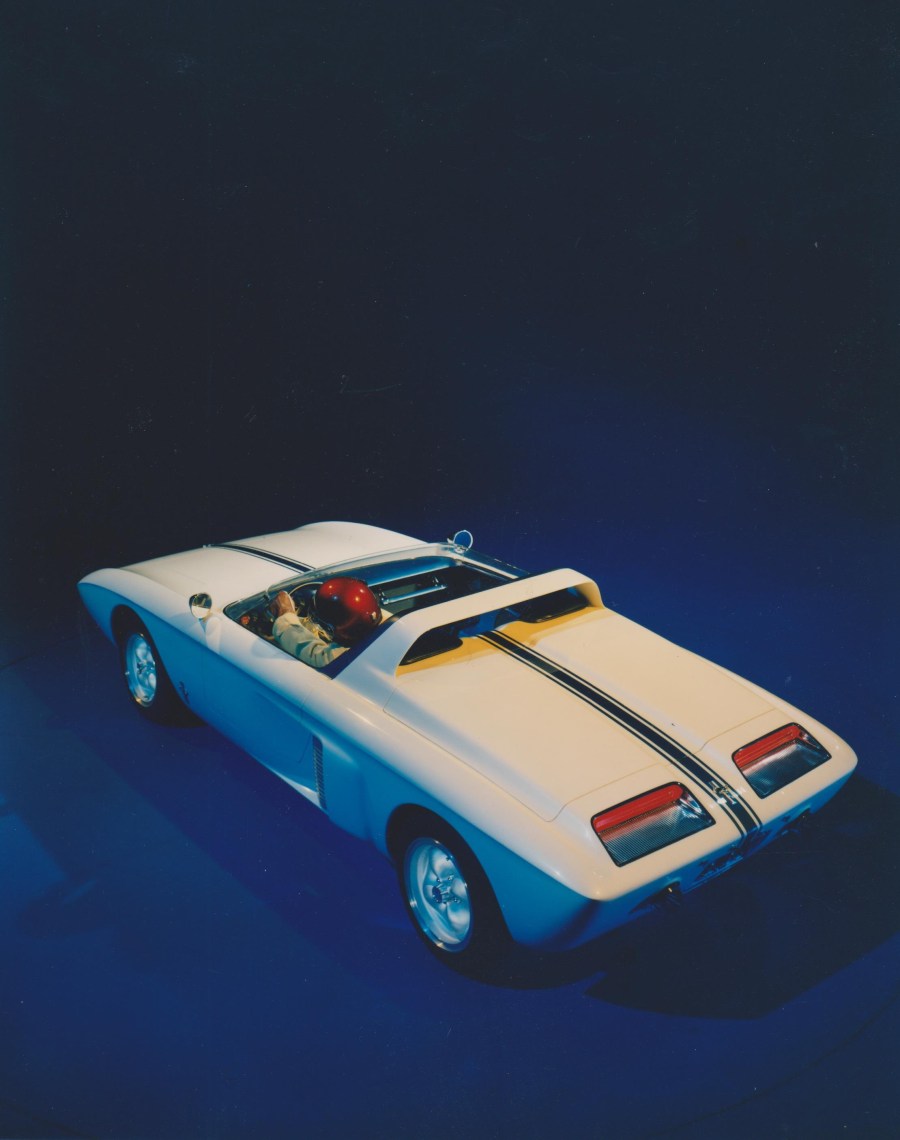
Long before the Ford Mustang ignited the ‘Pony Car Wars’ in 1964, the name was attached to an altogether different sports car; one that went from preliminary sketch to fully functional prototype in little over three months. It was Ford’s product planner, Don Frey, who first petitioned for sportier models. He could see that arch rival Chevrolet was making hay thanks to its small-block V8, which had usurped the Ford ‘flathead’ unit as the hot rodders’ engine of choice. It also had the Corvette in its armoury. He wanted the Blue Oval to project a more youthful image.
This was a different type of car, though; something that bit more European in outlook, not least the use of a V4 engine from the German Taunus saloon that was sited amidships. This was due in part to packaging requirements, the finished article weighing in at a mere 1544lb (700kg). The Mustang ventured out on track for the 1962 Formula One season-ending round at Watkins Glen where it acted as the course car.
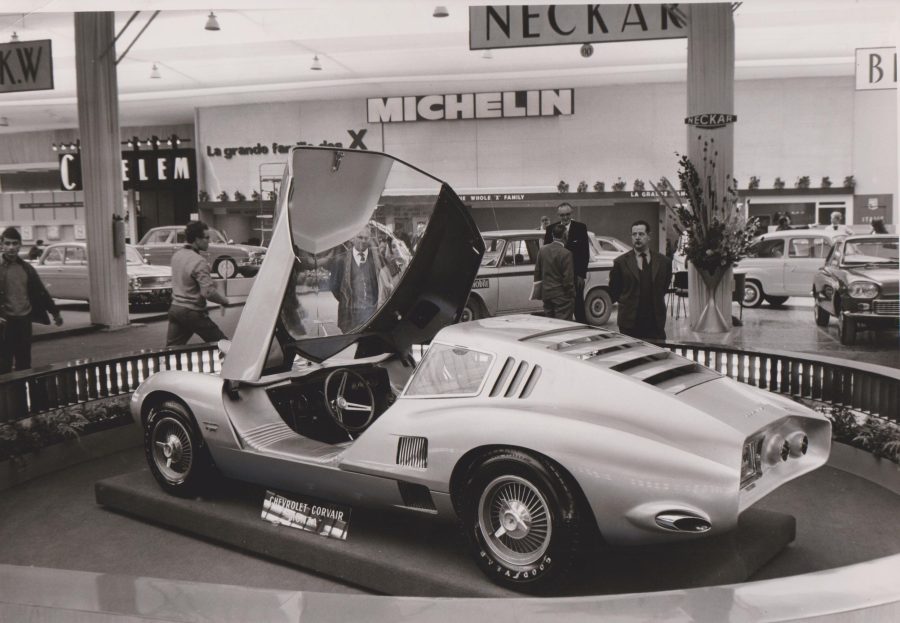
Chevrolet Monza GT
One of the most fondly recalled concept cars from the USA, the Monza GT was a media sensation following its fleeting appearance during the Road America 500 race meeting in September 1962. According to a GM press release, it represented “part of Chevrolet’s continuous program of building and evaluating new styling and engineering ideas. While they will not be produced, we will be most interested in show visitors’ reactions to them.”
Styled by Larry Shinoda, Anatole Lapine and Paul Deesen, the Monza GT was based on a Chevrolet Corvair platform that had been shortened by 25.4mm (15in). The donor car’s air-cooled flat-six was turned through 180 degrees and mounted ahead of the transaxle, which made for a mid-engined layout. A distinctive form of concealment was used for the rectangular headlamps, too. Rather than featuring pop-up ‘lids’, here each lamp boasted a streamlined two-piece cover; one hinged upwards, the other downwards per side as needed.
Studebaker Spectre
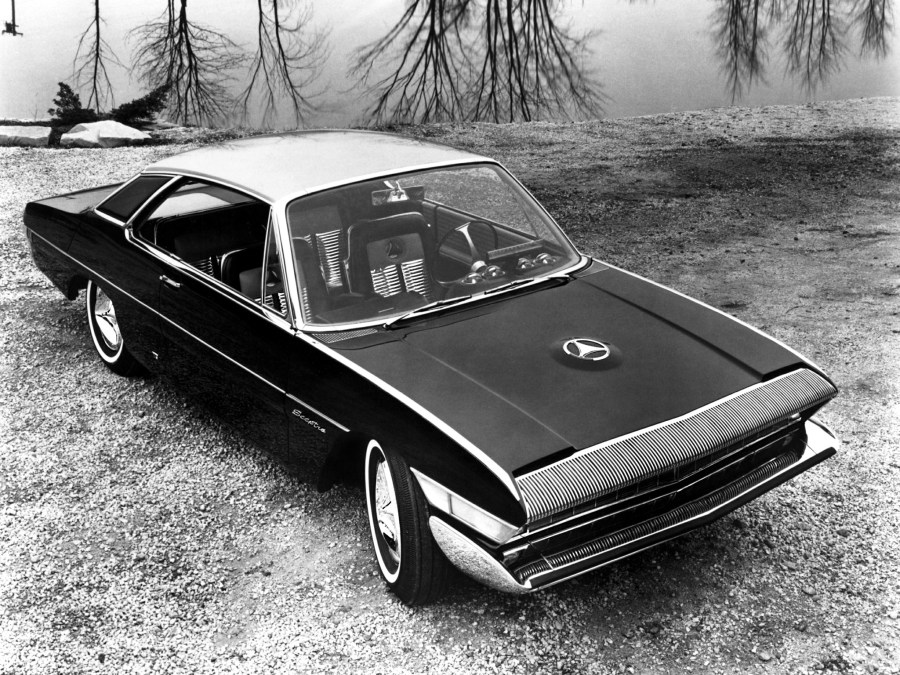
The Spectre was shaped within the Brooks Stevens Studio in Milwaukee, Wisconsin, and was one of several proposals put before the Studebaker board in the spring of 1963, representing a possible replacement for the Gran Turismo Hawk (another Stevens product). The prototype was constructed by Sibona & Basano, the Turinese minnow charging $16,000 for the privilege.
The car’s styling was clean and understated in profile, but the front end represented pure jet-set whimsy thanks to its ‘electric razor’ grille and Sylvania Light Bar system of illumination.
By way of a footnote, the Raymond Loewy/William Snaith Studio also pitched notchback coupe and fastback iterations of the Studebaker Avanti, with John Ebstein, Bob Andrews and Ron Kellogg producing outlines that were transformed into three-dimensional reality by Pichon-Parat in Paris. Neither model was adopted for production, although both steel-bodied prototypes still exist.
GM Runabout
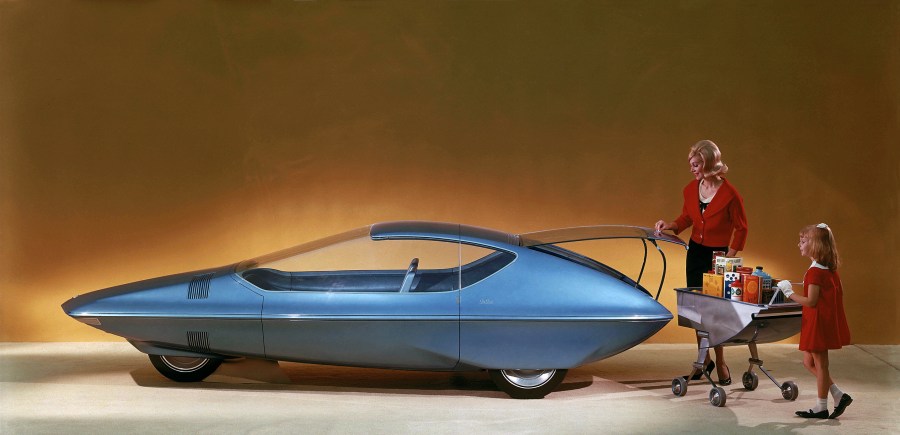
American car buyers have never really taken three-wheelers to heart, which may explain why this intriguing curio is nowadays forgotten. The Runabout was one of three General Motors show cars built for the 1964 New York World’s Fair, held in Flushing Meadows, the other being the GM-X and Firebird IV. It was intended to showcase design innovation, and this sleek trike wasn’t without interesting features.
While GM would not get away with such things in today’s more enlightened times, the Runabout was trumpeted as being a car for housewives. It was a ‘grocery getter’, one that was known internally as The Shopper. It was conceived as a four-seater car with a front-mounted engine, although what exactly powered the Runabout was never divulged. It could, conceivably, have encompassed anything from two- and four-stroke units to a bank of batteries.
As with its fellow showstopper, the GM-X, the Runabout didn’t employ conventional doors. The windscreen formed part of a canopy that tilted forward and up, allowing passengers access to the cabin. The only door, if you can call it that, was the rear hatch. Even then, the lone promotional image that showed occupants in the car was of a little girl sitting in the back seat. No adults were ever pictured getting in or out of the Runabout, let alone seated. Oh, and the lower rear section of the outer body incorporated a shopping trolley. Obviously.
Mako Shark II / Manta Ray
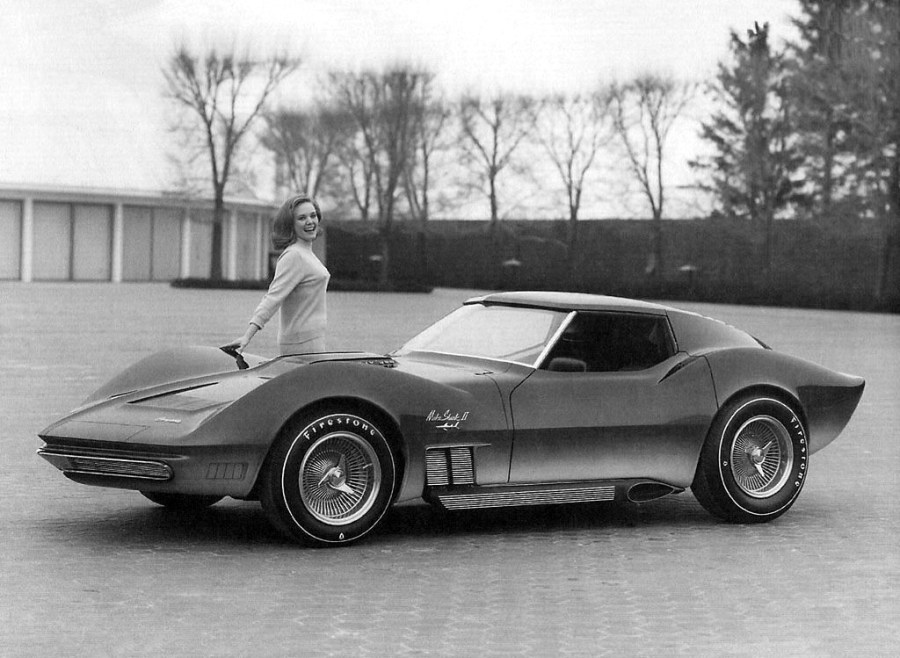
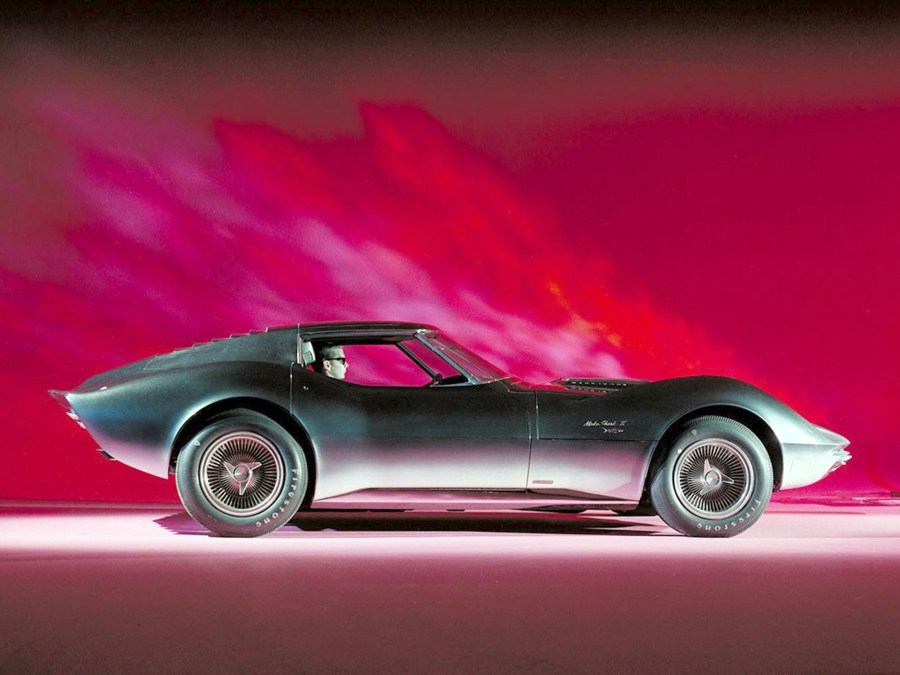
Unveiled to great acclaim at the April 1965 New York International Auto Show, Chevrolet’s newest concept car fully embraced the maxim of ‘It ain’t done ’til it’s overdone’. The Mako Shark II, or XP-830 in less romantic GM internal speak, was a stylistic tour de force and a harbinger of the Corvette’s future design direction. It also represented pure show car whimsy, as was to be expected from styling czar Bill Mitchell in his pomp.
This mock-up was subsequently scrapped, although a running car – complete with a 427cu.in V8 – was completed in early October of that year ahead of a tour of Europe. It was displayed at major international shows in Paris, London, Turin, Brussels and Geneva, prior to making a repeat visit to the Big Apple in April 1966. Many of the styling cues were subsequently incorporated into the C3-generation Corvette that entered production in 1968.
That wasn’t quite the end of the story, though. The Mako Shark II was later transformed into a different concept car, the Manta Ray, which emerged in 1969. While ostensibly similar, the front end now had a pronounced chin spoiler, plus a bank of rectangular headlights shrouded in Perspex. The roof and rear quarters were also revised, the tail now tapering to a point. It also received an all-aluminium 427cu.in ZL-1 V8.
AMC ‘Rambleseat’
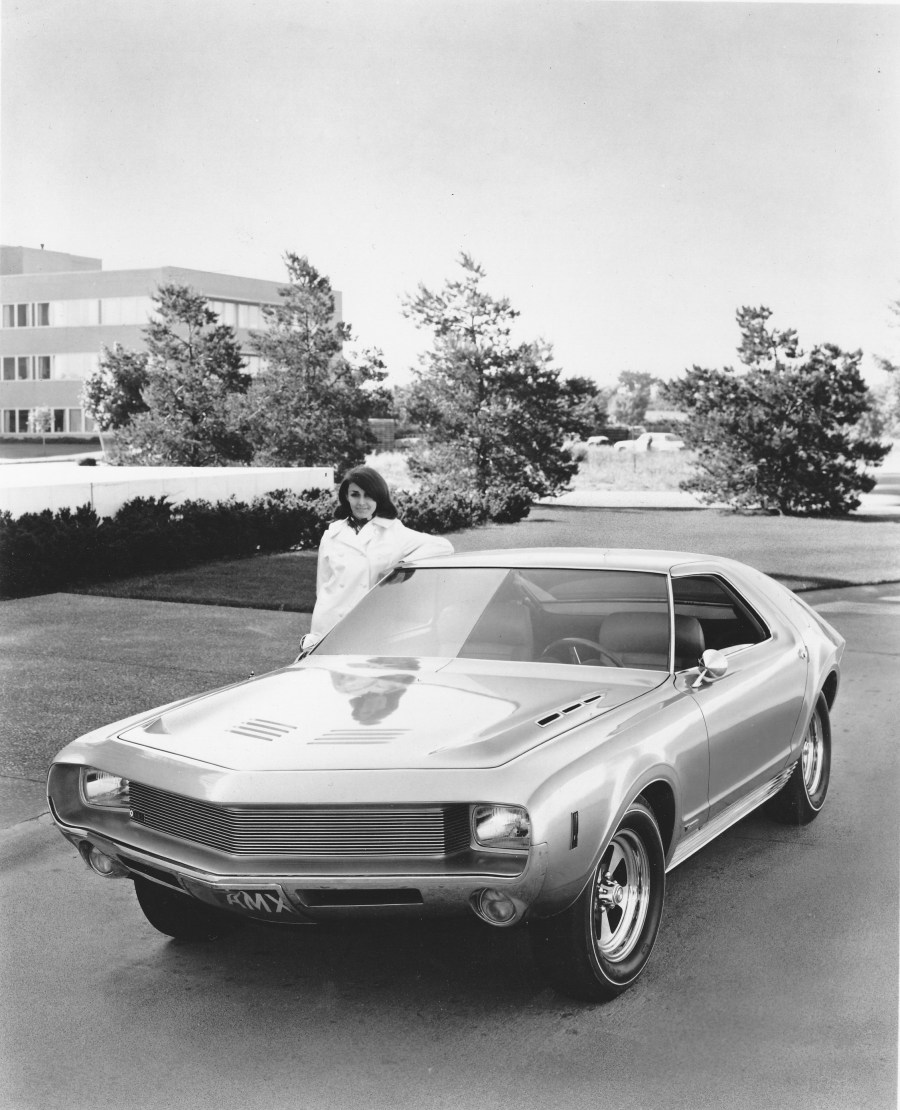
American Motors Corporation was looking for an image overhaul during the mid-1960s… and with the arrival of a non-running, glassfibre-bodied concept car at the February ’66 Chicago Auto Show, it got that and more. This fastback coupe hinted at a new breed of Pony Car, even if some of its design features were a little off the wall. Dubbed ‘Rambleseat’ due to its ‘rumble seat’, which substituted for a boot, it did enough to convince the management in Kenosha to press ahead with the construction of a second prototype.
Though keen to continue investigating the use of glassfibre, AMC subcontractor Alfredo Vignale was unfamiliar with composites, and so his employees produced a hand-finished, steel-bodied car instead. Based on a modified 1966 Rambler chassis, complete with 290cu.in V8, it was delivered on the eve of the 1966 New York International Auto Show.
As a coda to the story, the idea of a rumble seat – or ‘dickey seat’ in British parlance – refused to go away. James Jeffords, who was heavily involved in AMC’s Trans-Am motorsport programme, worked closely with designer Brooks Stevens on a customised AMX that they intended offering to the public with an al fresco +2 seating arrangement. The idea was to build 500 cars, complete with super-plush cabins, but AMC’s management refused to countenance the idea.
Ford Techna
The 1960s witnessed a seismic shift in the way the American motor industry viewed passenger safety. In particular, the publication of Ralph Nader’s Unsafe At Any Speed in 1965 did much to focus the attention in the corridors of power in Detroit, albeit under duress. The car pictured here was Ford’s response – designed in ’65, but not seen publicly until the 1968 New York International Auto Show. According to the press release, this brave new world was “a test bed for more than 50 innovations which might become Ford’s better ideas for the future”.
Tellingly, whoever wrote this PR copy neglected to mention what engine and transmission were being employed. The press release went on to add: “Occupants have unobstructed front visibility through a structural windshield that literally wraps around. It completely eliminates the front corner pillars. The low-profile hood is designed to reduce reflections into the driver’s eyes… The Techna’s electric shift control mechanism uses a rotated ring control instead of a gear-shift lever. An electronic speedometer senses speed with an infrared light beam.”
Other features included “plastic bumpers with load-supporting steel structures” and an “odour detector”. Following its unveiling, the Techna spent the next two years spreading the safety gospel before it was put out to pasture.