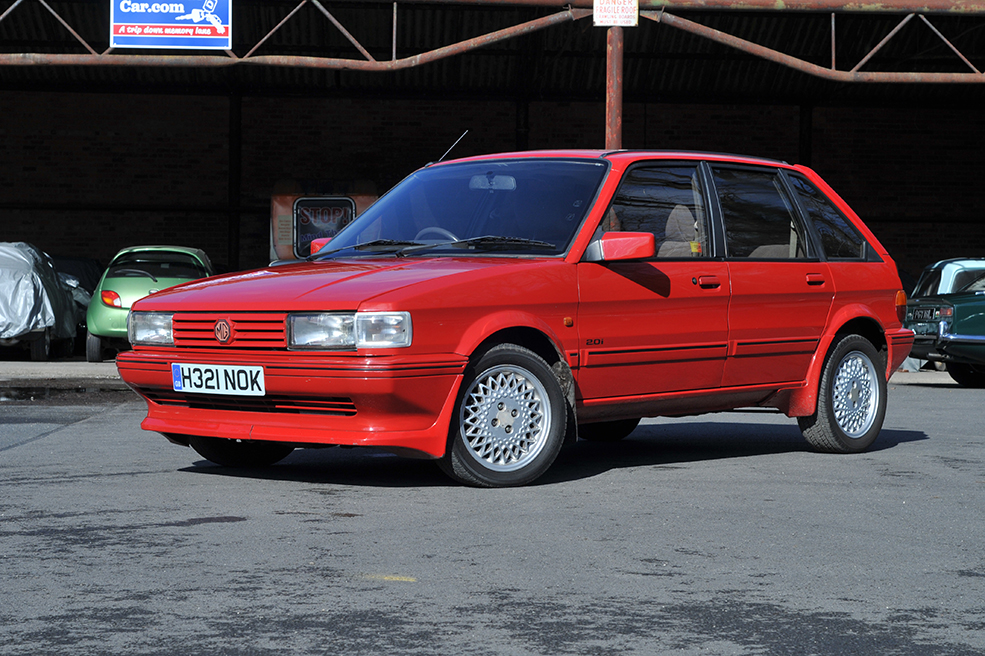

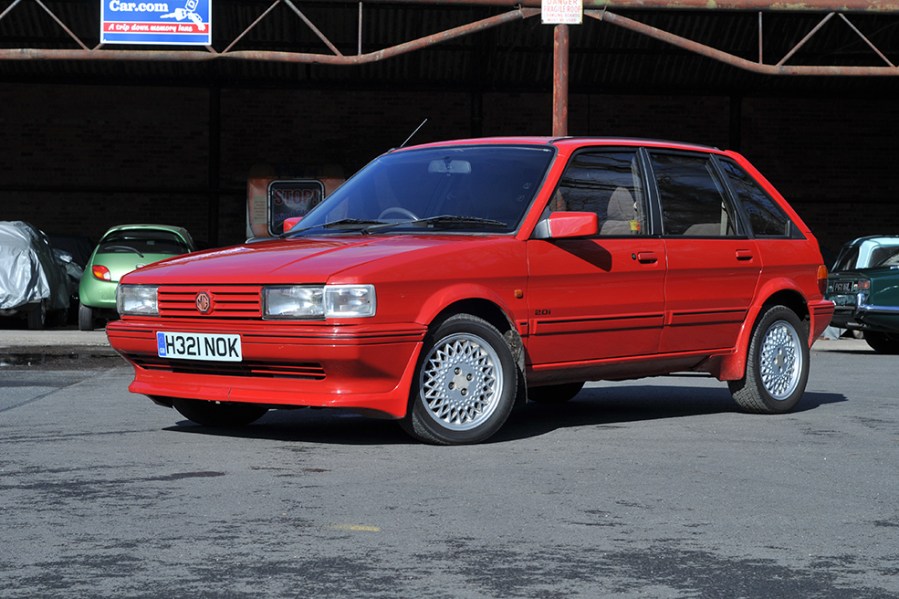
We try the underappreciated MG Maestro, the GTI-beater from the era when it wasn’t a proper MG unless it had red seatbelts
Words and images: Paul Wager
You don’t need me to tell you how different car brands evoke completely different images depending on your age. To a car-mad youth today, a Cooper S is a turbocharged hatch or even an EV rather than an A-Series-powered flying brick, while of course a Beetle was a mundane pastiche on a Mk4 Golf platform rather than the 22-million-selling air-cooled icon.
It’s much the same for MG and for me, as a child of the ’70s and learning to drive in the ’80s, a rubber-bumpered B is just as much an MG as the MG Metro my schoolmates lusted after. Back in the day of course, the badge-engineered MG versions of the mainstream Metro, Maestro and Montego were rather sneered at by lovers of the more traditional cars from TC to B, but with the benefit of hindsight they’ve earned their place in the marque’s history.
After all, the recipe for many of the earlier production MGs used ingredients from the saloon cars of the day and this cost-effective approach was key to the marque’s enduring success.
The Maestro itself tends to get a bad press but in reality it was a very competent car. Intended as a replacement for the Allegro, Marina and Maxi, the project was the first to dispense with the old ‘ADO’ tag which had been attached to BMC/BL models since the ’50s. Coded LM10, the car was conventional in its engineering: a transverse engine and front-wheel drive were commonplace by the late ’70s, while steel springs were employed instead of any fancy Hydragas or rubber cones. Struts up front and a torsion beam trailing arm rear axle sounded very much like the underpinnings of VW’s Golf and indeed it has been revealed that BL engineers used Golf underpinnings as the basis for the early prototypes.
In many ways that of course was key to the car’s success and as launched, the Maestro was a competitive package: the clean lines with the chunky wheel-at-each-corner stance looked fresh and modern if not ground-breaking and the car offered more interior space than an Escort or MkI Golf, with handling to match either of them.
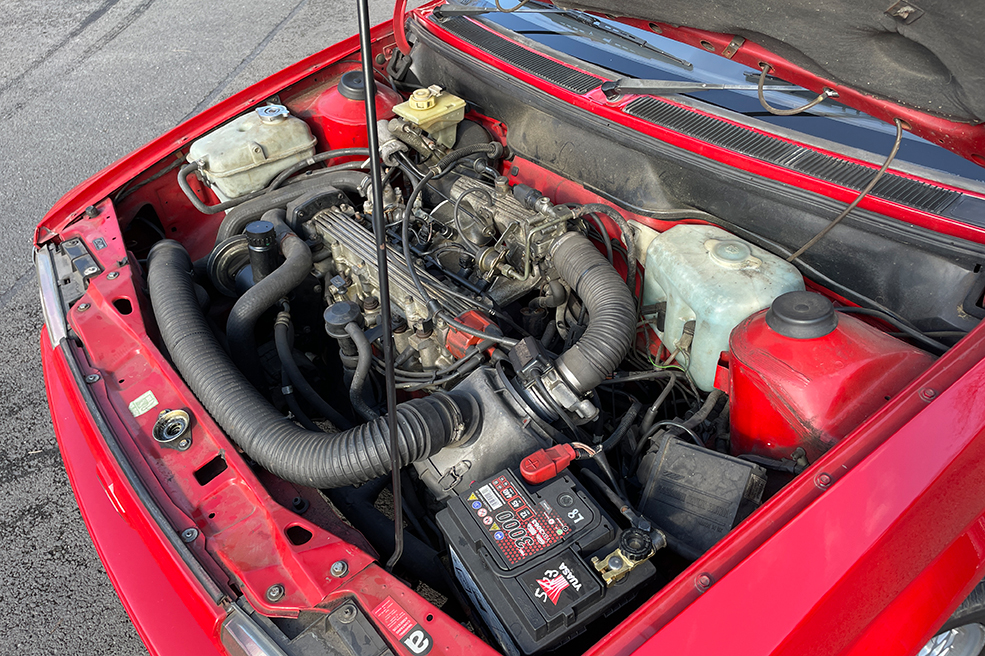
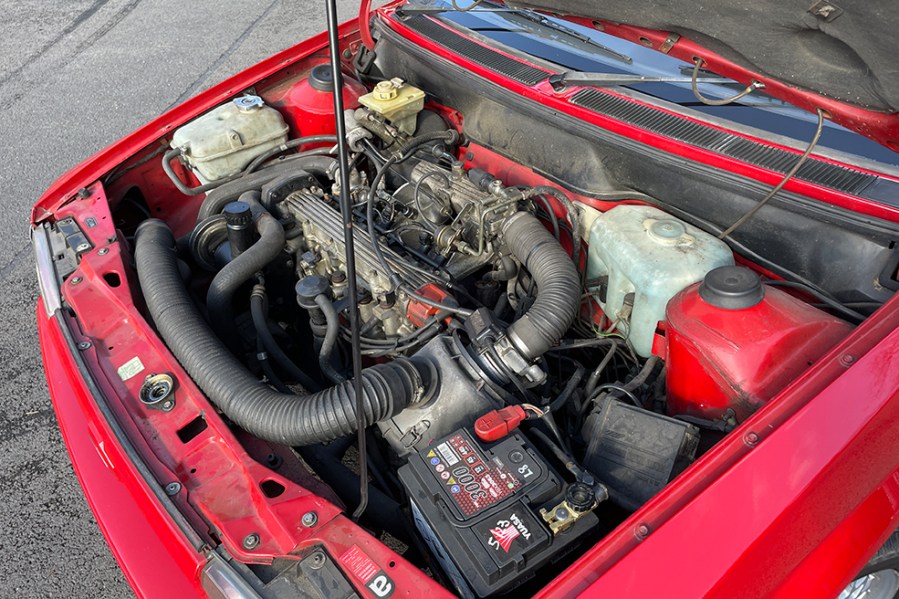
It was no surprise to lift the bonnet and find the evergreen A-Series grinning back at you though, this time back with an inline gearbox instead of the gearbox-in-sump design of the Allegro and Maxi. With an electronically controlled carburettor and a few other detail improvements though, the ‘A Plus’ offered class leading economy and in 1.3-litre form pulled the Maestro along convincingly well. A contender for the 1.6-litre class was created by using the R-Series engine and when a VW gearbox was found to be the perfect size for the job, the decision was made by the accountants to buy the units in wholesale from Germany rather than invest in developing a suitable box in-house.
Top of the tree though was the MG model. Adding twin Webers in place of the standard single SU unlocked 103 bhp with a throaty rasp more reminiscent of an Alfasud than a Marina. Less than a year later the R-Series was replaced by the updated S-Series offering the same power output without the fuel evaporation issues of the older design, the MG sprinting to 60 mph in 9.6 seconds and on to a 110 mph top end.
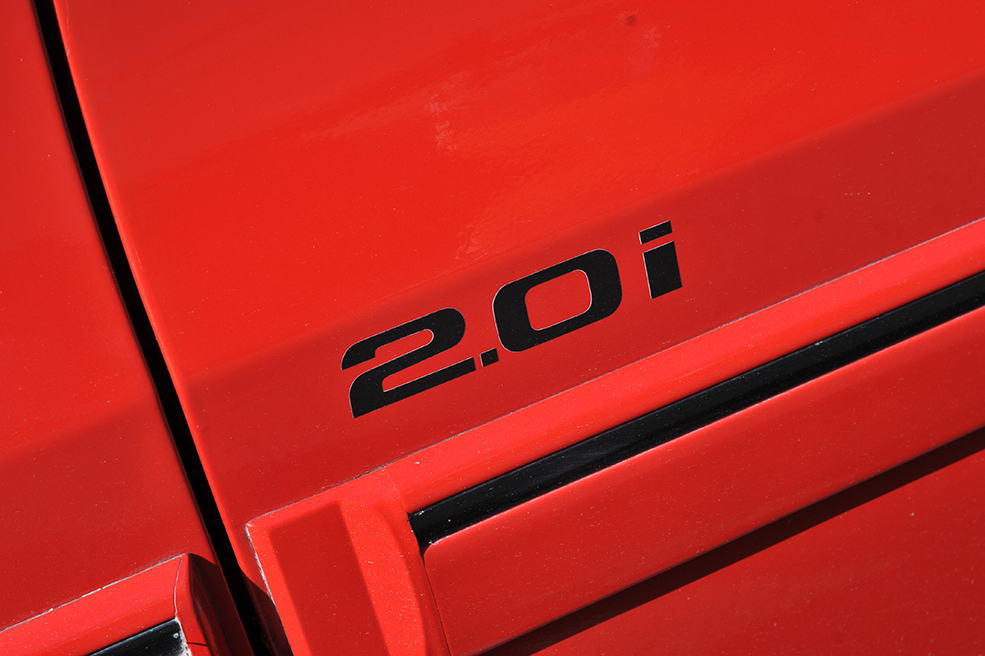
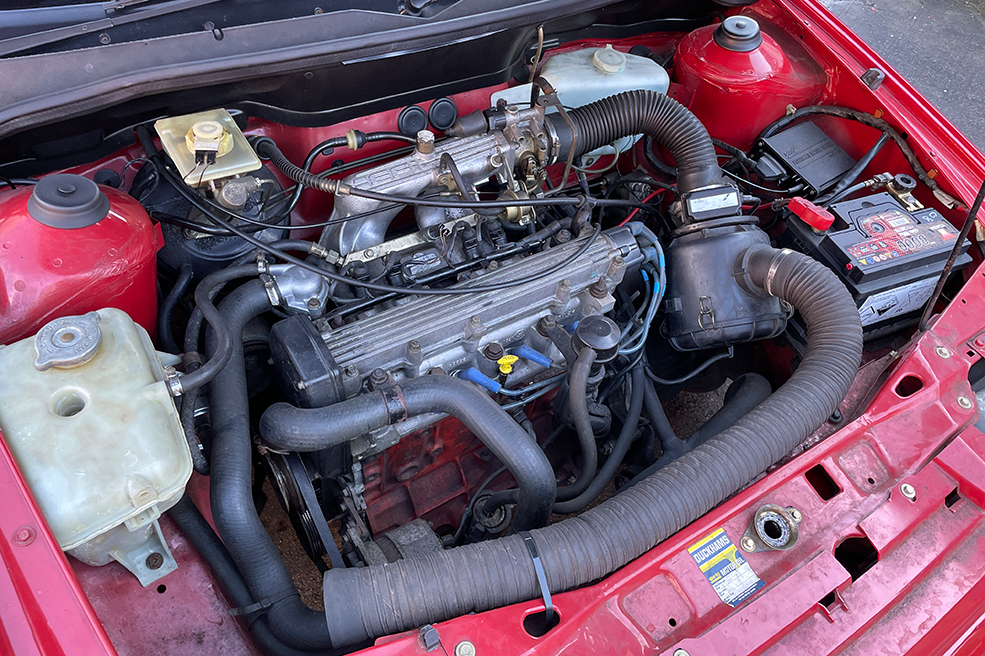
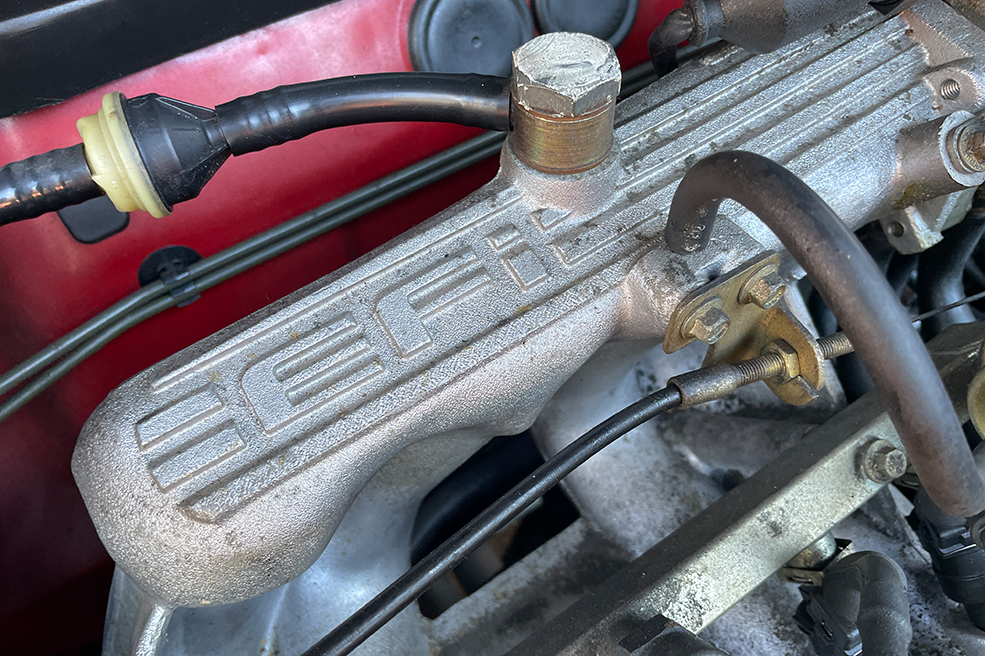
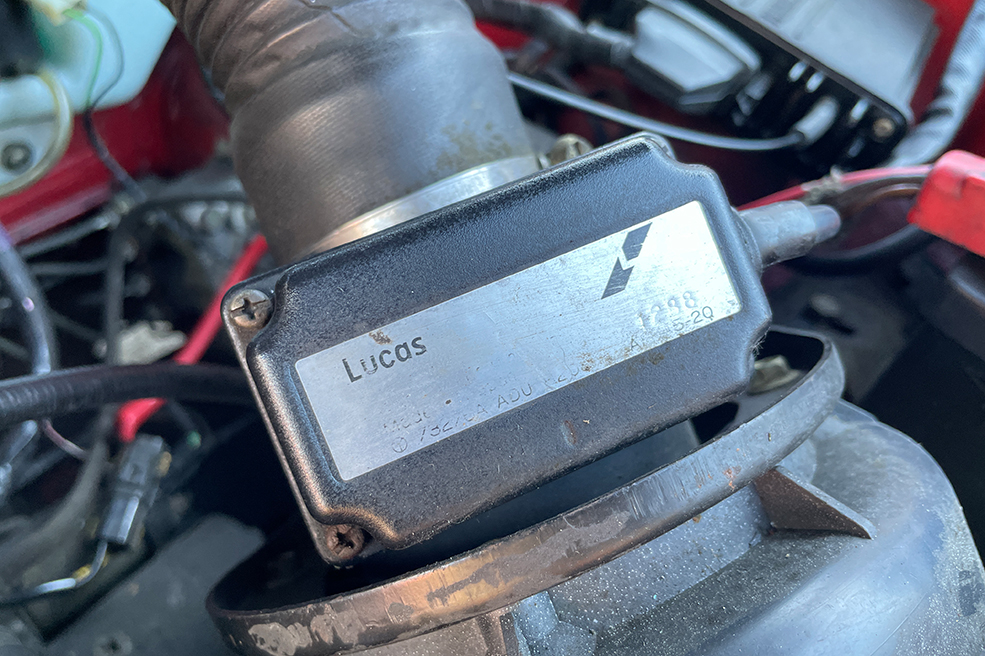
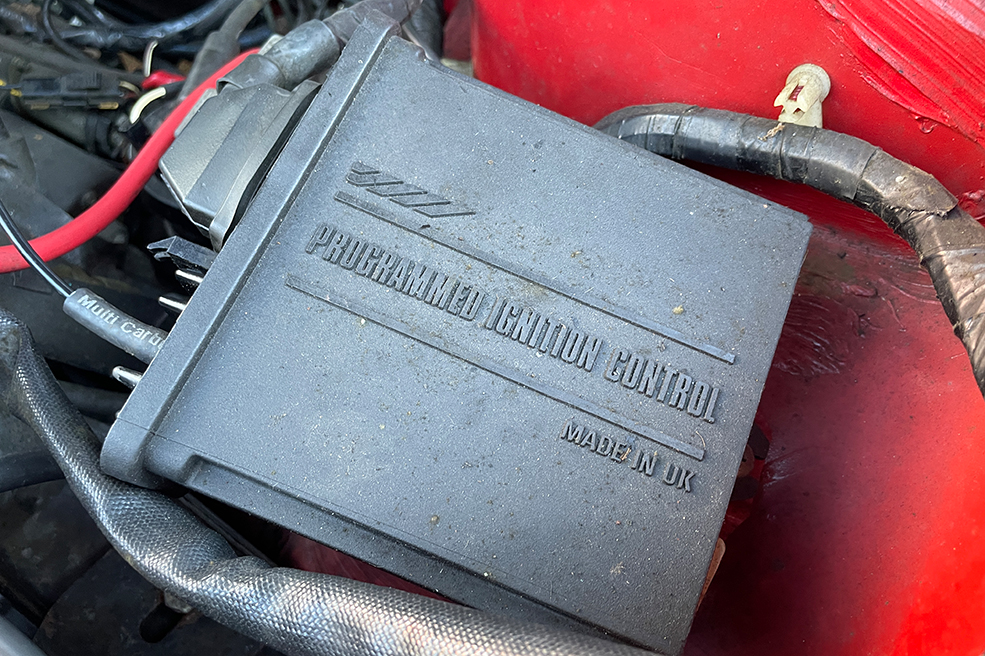
The S-Series was short-lived though, being replaced in 1985 when the MG Maestro got serious: packing the O-Series engine in 2-litre form with Honda’s PG-1 gearbox and electronic fuel injection, the 2.0 EFi took the fight to the XR3i and GTI with its 8.4-second sprint to 60 and 115 mph potential.
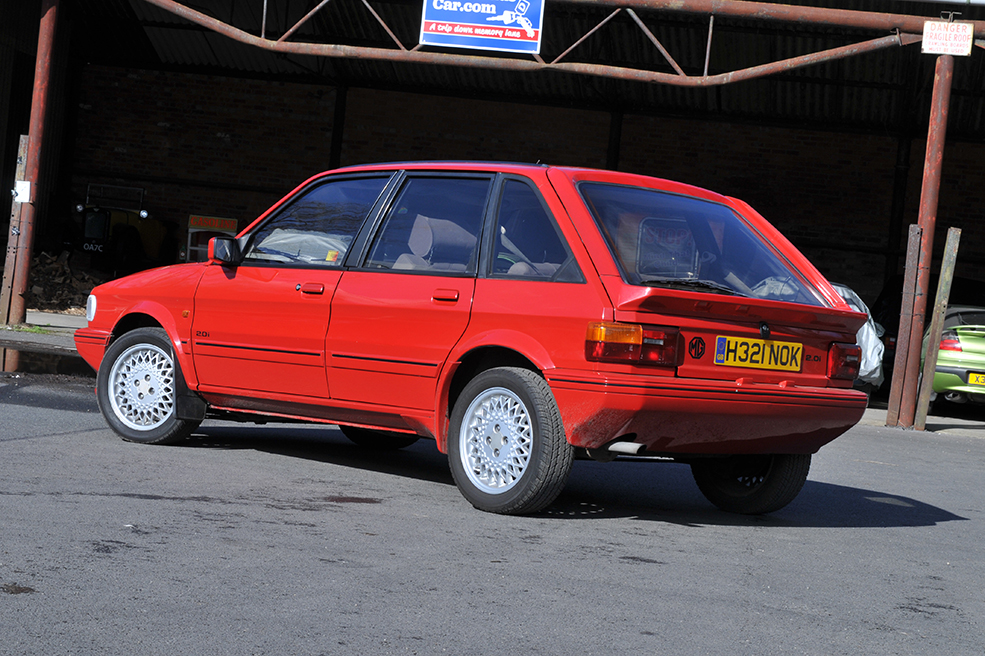
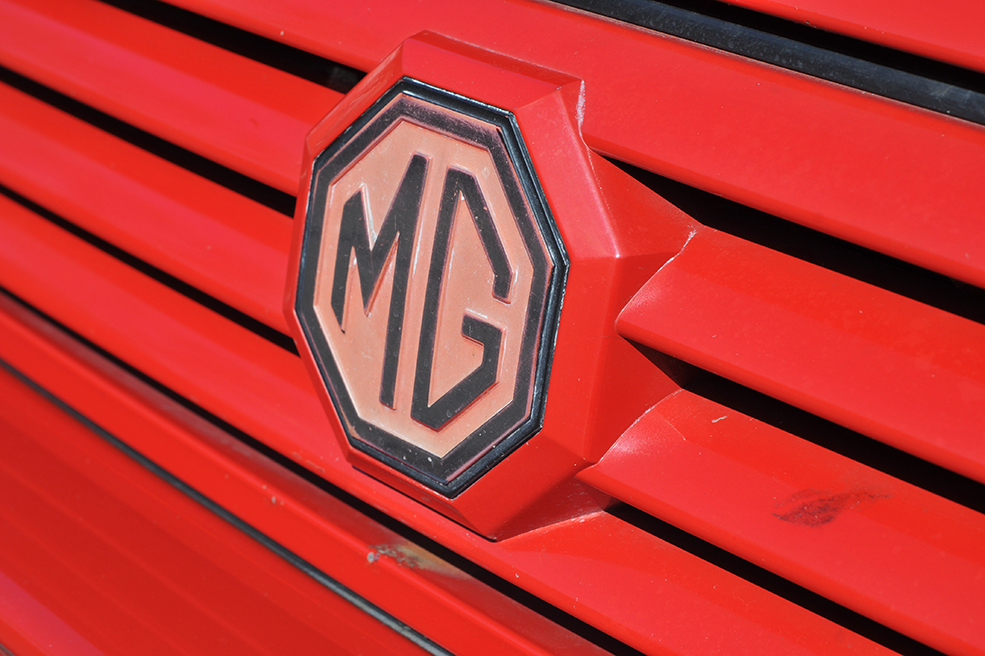
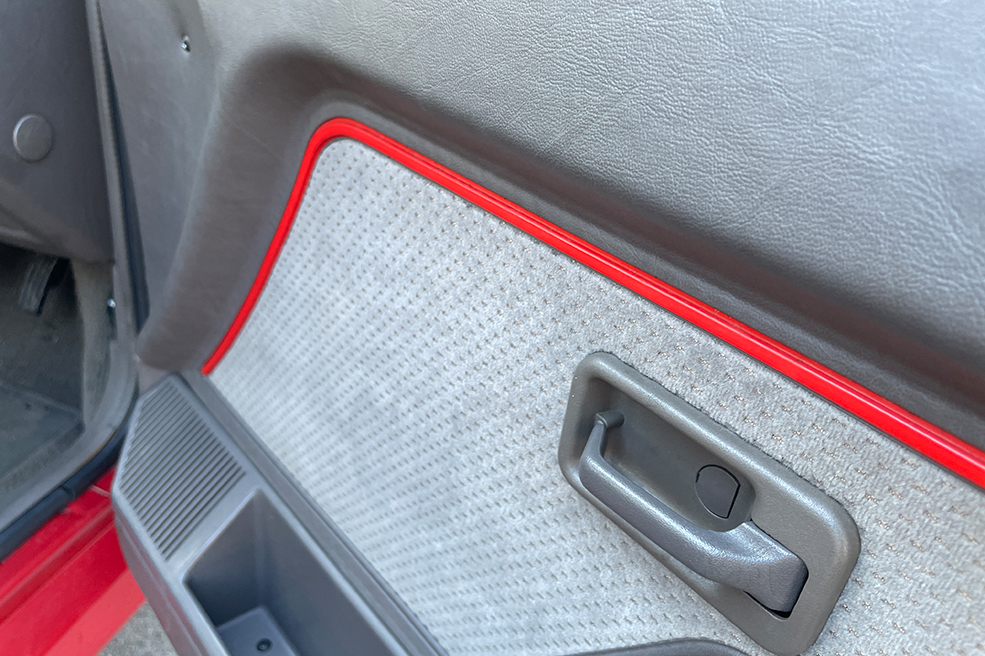
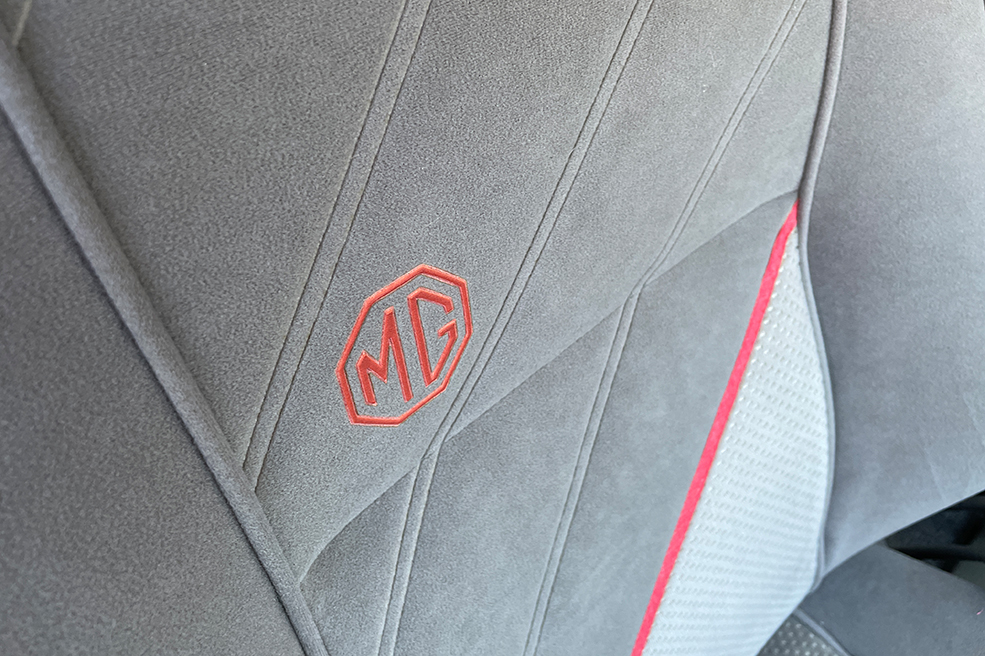
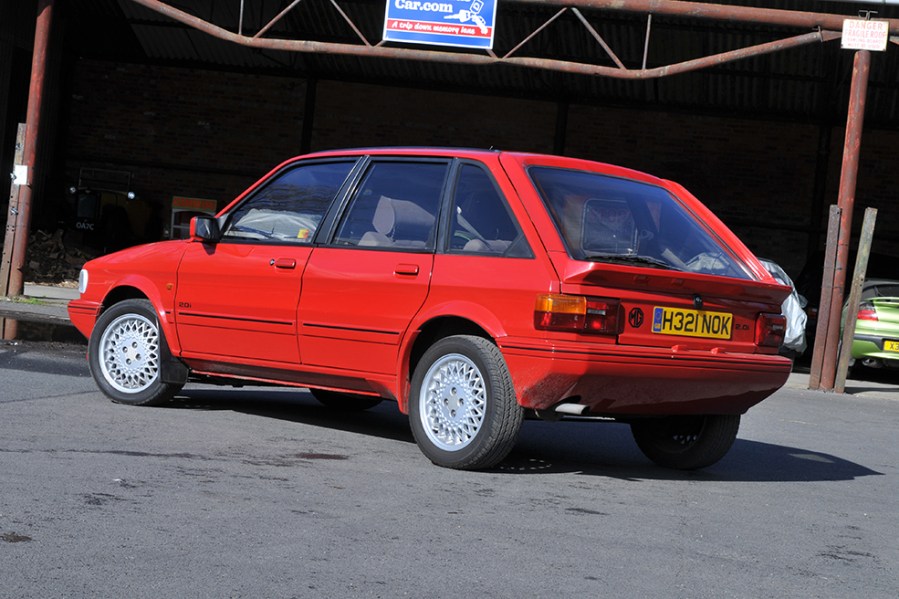
The Golf, even in 16-valve form, was making do with just 1781cc, while the Escort was still stuck with the harsh 1600 CVH and on the road the 2-litre’s 134lb.ft torque made the Maestro the equal of both. The styling changes with the 2-litre model kept the appeal of the Maestro up to date, with red bumper inserts and striping, plus a smattering of MG roundels. Of course the idea was ultimately developed into the frantic MG Maestro Turbo, but that’s another story.
So on paper it was a winner… but in reality although the car was a good package it lacked the robust construction of the Golf and in reality the MG Maestro is a real rarity today, even against the XR3i.
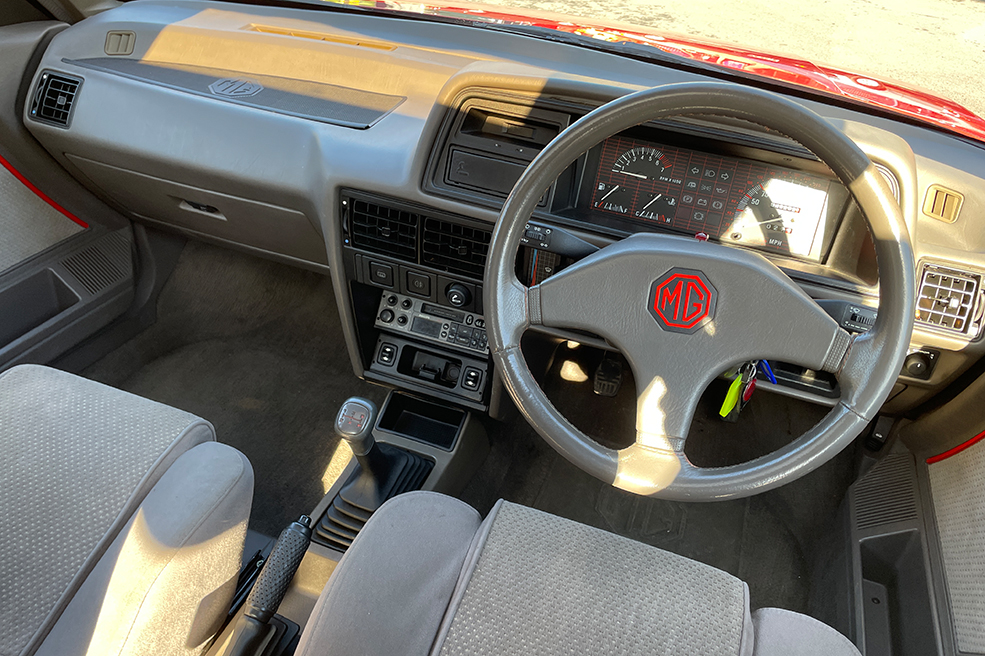
So how does it drive? Really very well, is the answer. I’ve covered more miles than I like to think about in Golf GTI’s of all descriptions and Escort XR3i’s too, but in many ways the Maestro is the better car. The doors don’t shut with quite the same heft as the VW but the shell feels a lot more substantial than the Escort and there’s a nice airy feel inside which is a world away from the coal-black interior of any ’80s Golf.
Slip the trademark Austin Rover bendy key into the ignition and the fuel-injected O-Series fires easily, reinforcing the point that these later MG Maestros were competing in a market where a manual choke and carb simply wouldn’t do.
If you’re used to Maestros with the sometimes baulky VW box, you’ll notice the improvement with the Honda unit which is more precise and lighter in its action. The biggest surprise though is in the way it goes – not so much in terms of outright searing pace but in terms of response. The even torque spread of the eight-valve motor does mean the MG picks up from low speeds nicely and feels quicker on the road than the bare performance figures suggest.
It’s easy to forget of course that later hot hatches tended to use multi-valve engines which needed plenty of revs to give their best, while modern performance cars tend to be small-capacity turbo motors which lack the crisp response of a normally-aspirated motor.
Lesser Maestros were well regarded for their composed ride and although the MG was suitably beefed up, it remains a softer set-up than a Golf or XR3i, but doesn’t feel out of its depth. There’s certainly less road noise than in the Golf and it avoids the German car’s sometimes crashy ride too. Push it hard and as the understeer builds up you’ll realise that the MG is more of a sports saloon than a full-on hot hatch but for most of the time it’s the right way to be.
We tried this example at The Great British Car Journey’s ‘Drive Dad’s Car’ attraction and it’s an impressively tidy survivor – and one you can even sample for yourself, should you not relish the challenge of finding one for sale. A 1991 example, it’s one of the last and even though we were limited to the on-site test track, it was still able to shine. Certainly it was a handy reminder of our previous experience of MG Maestros which tells us that in a brisk cross-country sprint, it could keep up with a hard-driven Golf GTI and probably show it the way too. As the adverts said , “The Golf will be along in a second…”