
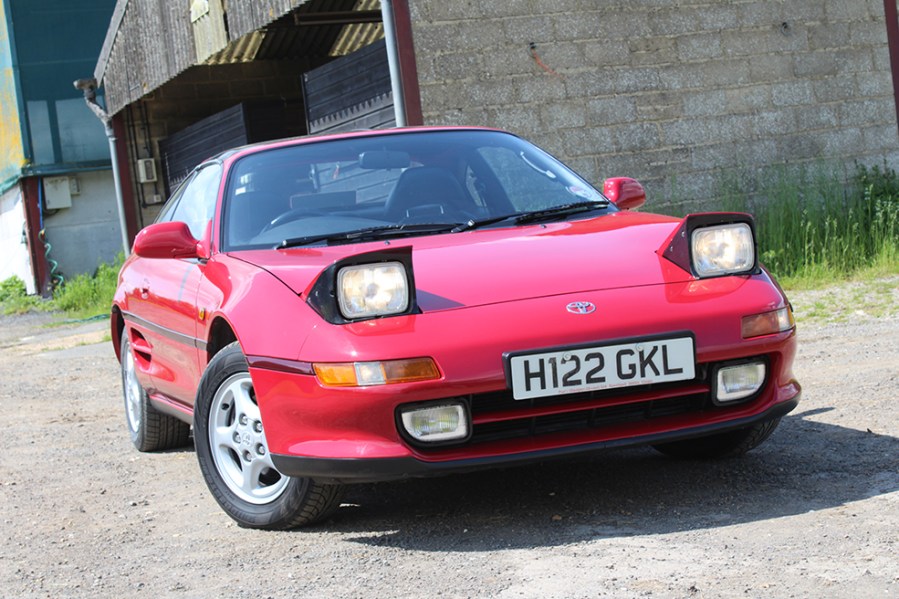
While no longer a bargain-basement choice, the Toyota MR2 Mk2 is a stellar modern-classic sports car. Here’s how to buy a solid example
Words: Richard Gooding Images: Jack Grover With thanks to: Brad Cox & Watley Classics
Launched in October 1989, the ‘SW20’ MR2 Mk2 replaced the ‘AW11’, the first generation of Toyota’s mid-engined two-seater, which had gone on sale in 1984. Retaining the same mid-mounted engine layout, the second-generation MR2 was an immediate success.
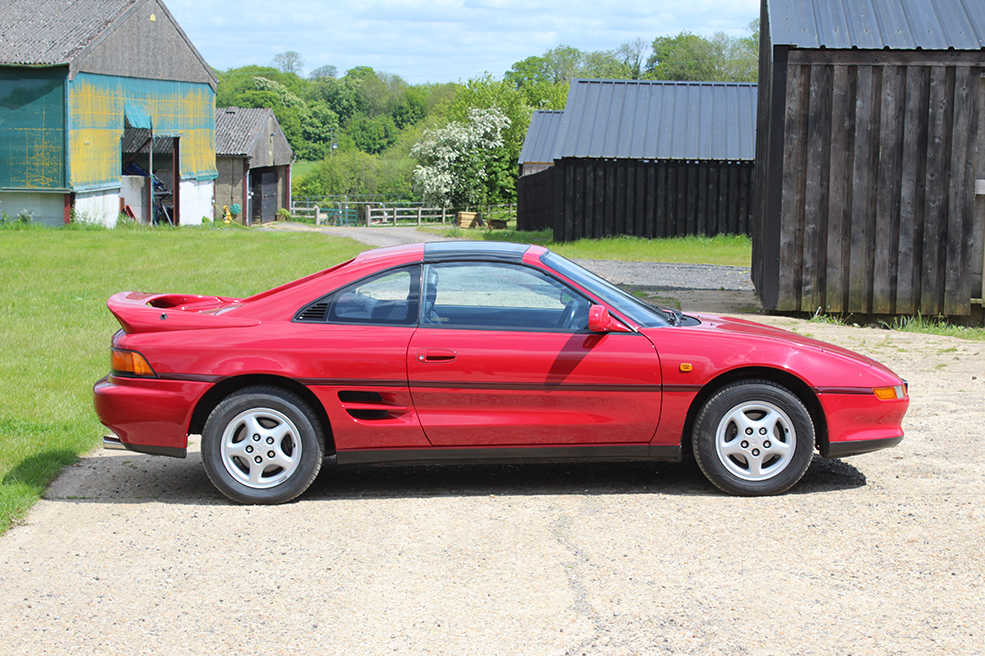
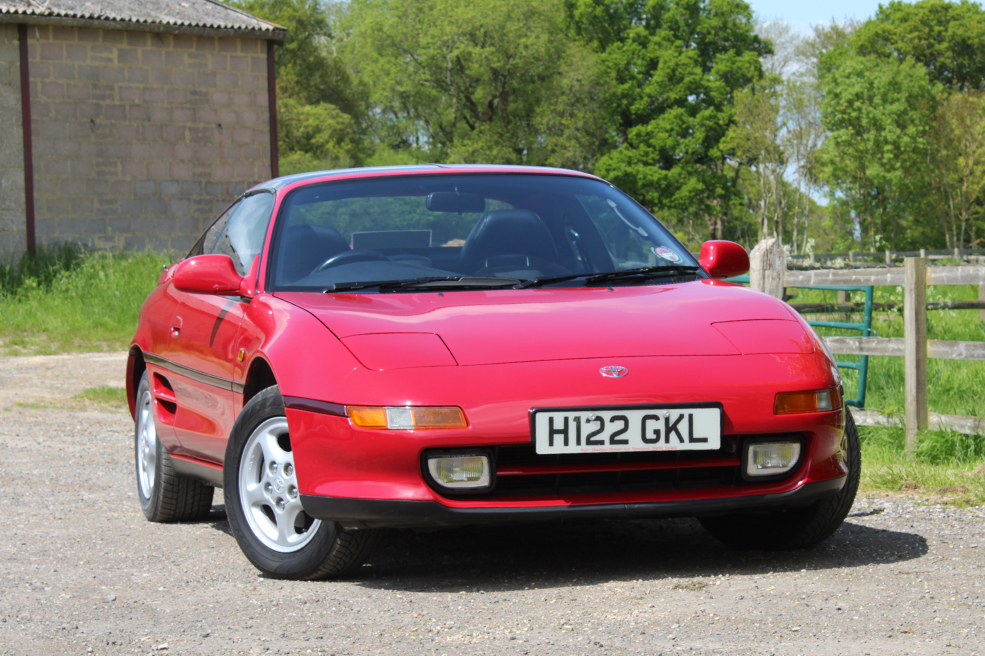
The new Mk2 featured more flowing, curvaceous styling, seeming at times more akin to red sports cars bearing a prancing horse than a Toyota. Powered by new 2.0-litre engines, the ‘baby Ferrari’ from Toyota was faster, better equipped and more refined than its predecessor. Production lasted ten years, across five distinct revisions: Revision 1 (December 1989-December 1991), Revision 2 (December 1991-November 1993), Revision 3 (November 1993-June 1996), Revision 4 (June 1996-December 1997) and Revision 5 (December 1997-August 1999).
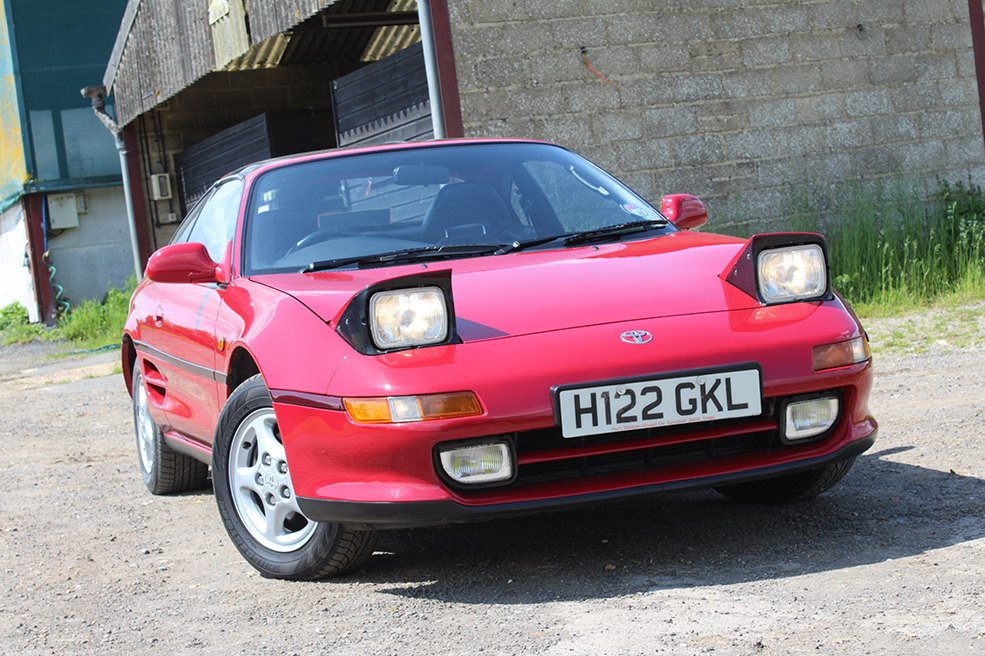
Some very late Mk2s are referred to as ‘Revision 6’ models, with ‘afterburner’-style rear lights and quad headlamps, as Toyota sought to clear remaining SW20 stock before the arrival of the ‘W30’ MR2 Mk3 in 1999.
The MR2’s main rivals included the Alfa Romeo GTV, Fiat Coupé and Mazda MX-5. In the latter half of its production, the Porsche Boxster emerged as a formidable competitor – and the only other mid-engined rival – yet the MR2 remained unmatched in terms of value for money. Today, the Toyota GT86 could be considered a modern equivalent, offering similar real-world performance to a naturally aspirated Mk2 MR2.
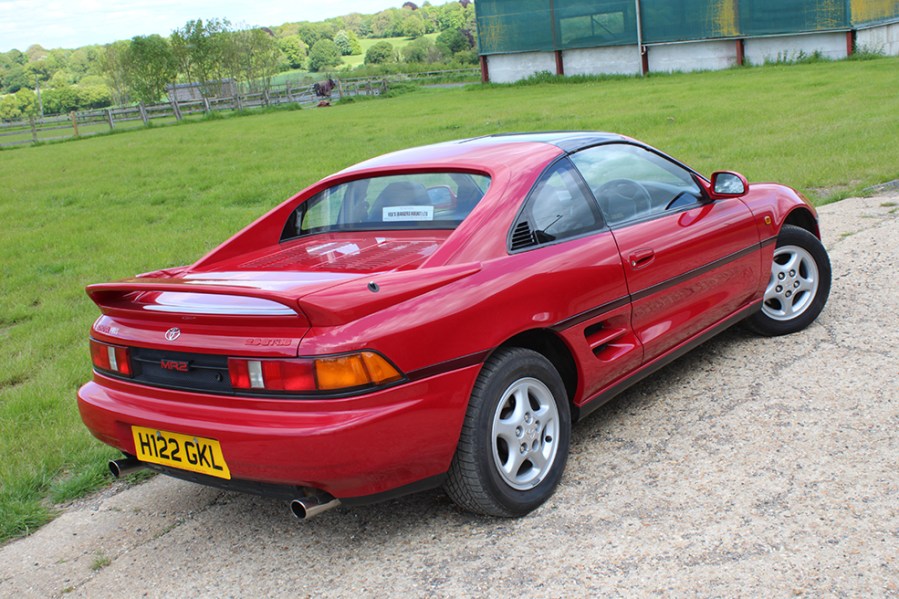
Toyota MR2 SW20 values
“Compared with other Japanese ‘hero’ cars such as the Nissan Skyline and Toyota Supra, the MR2 hasn’t experienced the same stratospheric rise in values, but the market is only just beginning to catch up,” says Cox. Naturally aspirated models are more common and so don’t command the same prices as turbo versions. Many n/a cars, however, have been engine-swapped and can be picked up for a bargain. The SW20 may continue to appreciate gradually if it follows the pattern set by the earlier ‘AW11’ Mk1 models.
A decent project car can be found for around £2000, but expect rusty sills and poor paintwork at best. Revision 3 and later models, with updated light clusters and colour-coded bodywork, are more sought-after, though mechanical differences are minimal. A low-mileage, well-kept Revision 2 car is generally a better buy than a scruffier Revision 3 example. A good n/a Revision 3 onwards car will cost roughly £4000. Turbo models have soared in price, with earlier project-condition examples starting at £6000, while later cars can reach up to £25,000.
Finally, tasteful and performance modifications don’t necessarily reduce resale value. The work involved in engine swaps, forged internals, or larger turbos can add value, particularly if the parts are from reputable manufacturers.
Insurance Costs
1991 Toyota MR2 2.0, £4500 value
Example quote: £141.52 or £159.52 with Agreed Value.
Quotation supplied by Lancaster Insurance. Tel: 01480 400761
Quote based on a 45-year-old marketing manager, access to another car, no claims or convictions, club member, 3000 miles per year, no modifications, living in SP2 0HL. Disclaimer: Subject to underwriting criteria. An additional charge may be payable. Authorised and regulated by the Financial Conduct Authority.
Bodywork
Rear sill rust is a frequent issue on the SW20 MR2, often caused by sound-deadening foam tucked into the rear quarters, which traps moisture. “These should be removed where possible. They can be accessed from inside the cabin by taking out the side panels behind the seats,” explains MR2 specialist and multiple-time owner Brad Cox.
The rear wheel arches are also prone to corrosion, along with the inner arches if road salt isn’t washed away regularly. Undertrays were fitted from new, while the stiffening bars beneath the car near the engine bay are notoriously dubbed ‘cancer bars’ due to rust caused by poor paint coverage – stainless aftermarket replacements exist. Inner headlight brackets are similarly susceptible to corrosion.
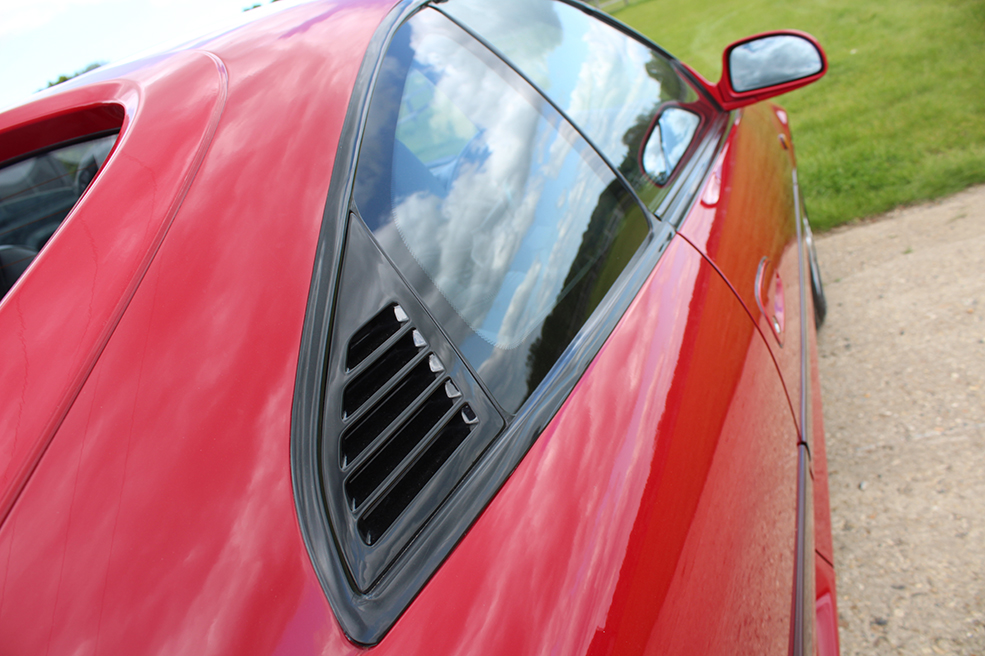
Regarding paint, all red cars experience pigment fade – UK examples were even subject to a recall – while other metallic shades, such as black or green, can suffer severe lacquer peeling. Exterior trims around the lower windows and door mirrors can fade or wear, though the parts themselves are generally durable. Front side lights and rear reflectors are clipped in and often targeted for theft because of their value.
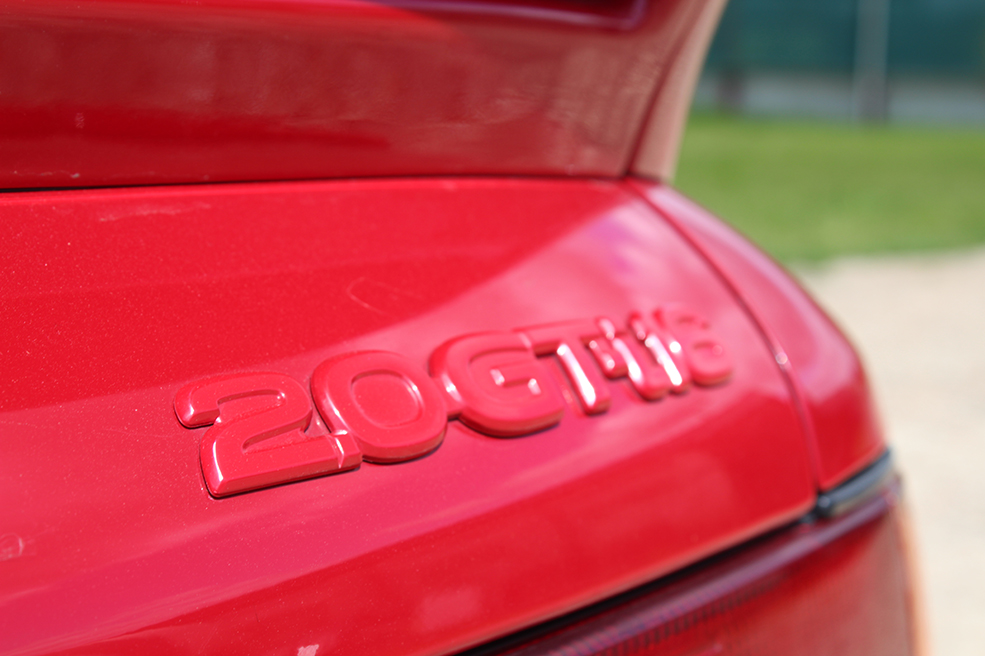
Leaks can occur from replacement windscreens if non-genuine seals are used. Glass T-bar roof panels are also prone to leaking; replacement seals are available but extremely costly and tricky to fit. Fully removable sunroofs on UK cars tend to have no major problems, while cars without sunroofs or T-bars are the lightest, stiffest, and also the rarest. Only GT models came with a rear spoiler as standard.
Engine and transmission
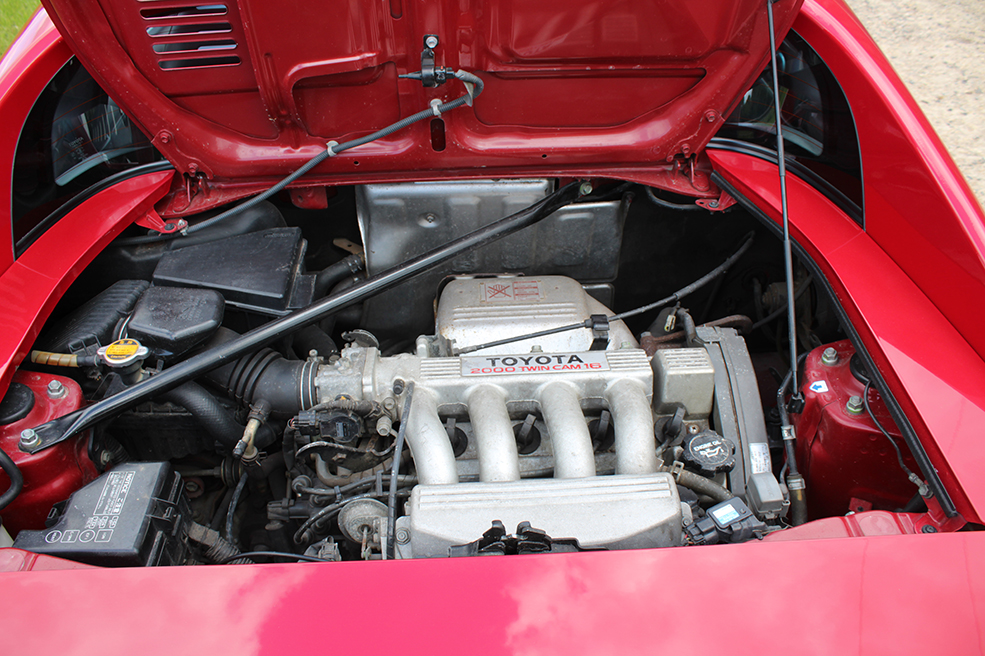
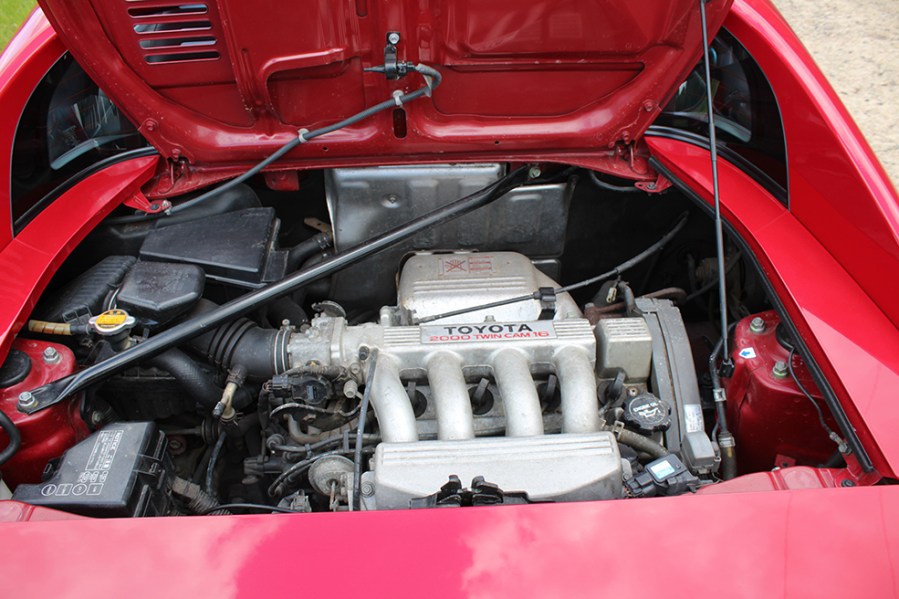
The MR2 Mk2 came with a choice of normally aspirated, ‘S’-series, non-interference engines mounted behind the seats, each shared with the contemporary Celica. The 119bhp ‘3S-FE’ 2.0-litre serves as the entry-level engine. Avoid this unit, as it is sluggish and unrefined, and spoils the sports car experience, says Cox. The 158bhp ‘3S-GE’ 2.0-litre is the most common. “It is a very well-built and refined unit,” Cox explains. “It delivers excellent performance and economy, with very few issues, provided the engine has been regularly serviced, although head gasket failure can occur if it overheats.” Engines from Revision 3 onwards – uprated to 173bhp – feature a revised intake manifold and cylinder head, but there is little difference in performance or reliability.
Not officially sold in the UK (though grey imports did arrive), the 225bhp turbocharged ‘3S-GTE’ engine was based on the Yamaha-assisted 3S-GE, but included a twin-entry ceramic turbo, air-cooled intercooler, and metal manifold catalytic converter. Highly tunable, outputs of 400bhp are said to be achievable. Other non-UK units include the rare 200bhp 3S-GE ‘BEAMS’ (Breakthrough Engine with Advanced Mechanism System) engines, with Yamaha-developed heads, VVTI, and coil-on-plug ignition.
There are many turbocharged cars available, yet Cox considers this unit one of the most underrated engines – MR2 or otherwise. “Boost arrives in a gulp around 3000rpm, and with the turbo sitting between the seats, it provides audible delight for both driver and passenger.” Revision 1 and 2 3S-GTE engines originally used fibre head gaskets, which can fail with age, but Revision 3 onwards adopted multi-layer steel gaskets. These can be fitted to earlier cars, reducing potential problems.
Cambelts on all engines should be replaced or inspected, though this is often overlooked; it’s a very tight fit to change with the engine in the car. Revision 1 and 2 turbos employ a hydraulic tensioner, which can fail if not replaced at recommended intervals. Also check for oil leaks at the sump, excessive exhaust smoke, and overheating. Turbos can suffer bottom-end bearing failure if not regularly serviced, and smoke may arise from failed turbo seals – the OEM ‘CT26’ and ‘CT20’ turbos use a ceramic shaft, which can become brittle over time. Failure can cause catastrophic engine damage, so replacement with a steel-shaft unit is advised.
SW20 servicing is straightforward aside from engine access, though two removable service panels either side of the engine lid help. The 3S-GE needs nothing beyond regular oil and filter changes – every 5000 miles on early cars. The ‘S54’ five-speed gearbox of naturally aspirated models is very robust, but should fifth gear fail, a repair kit is available. The ‘E153’ five-speed on turbocharged cars is a Getrag unit, offering the same mechanical feel as the naturally aspirated gearbox, while the optional limited-slip differential makes a noticeable difference to driving enjoyment.
Suspension, steering and brakes
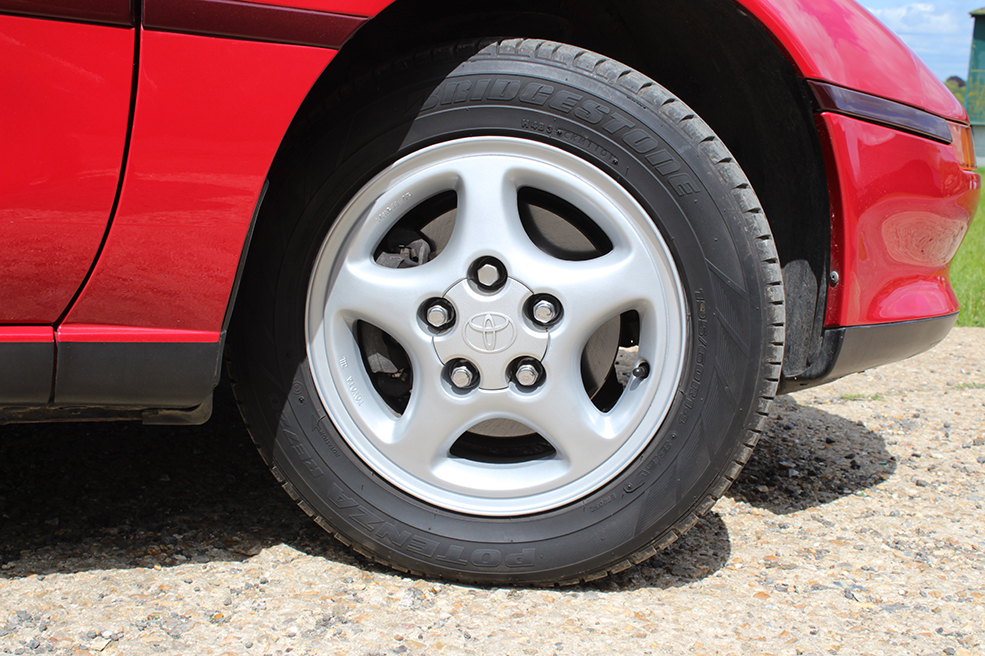
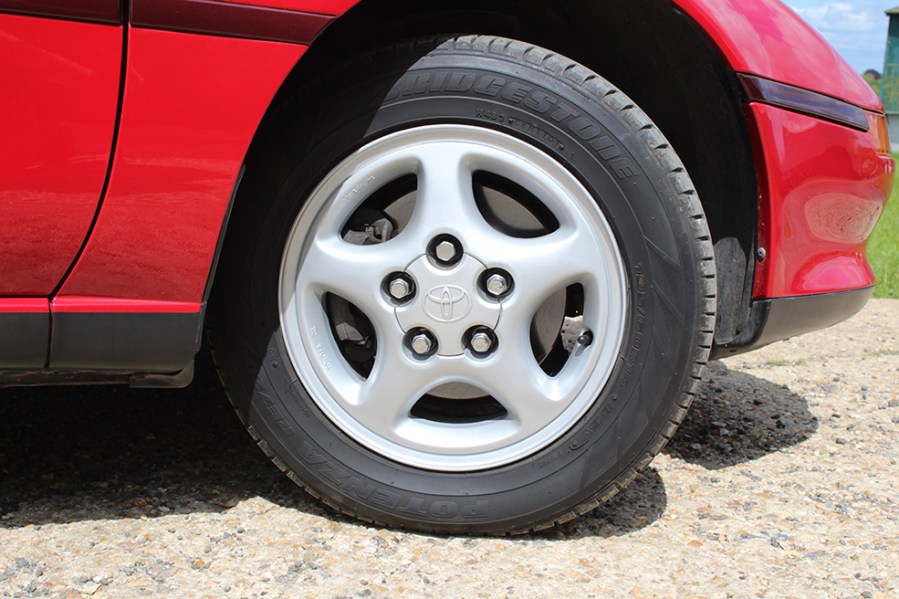
The SW20 MR2 features a more robust MacPherson strut and Bilstein suspension setup than its predecessor, with Revision 3 and later cars sitting slightly lower. Coilovers are a popular upgrade and can dramatically modernise the car. Given their age, most cars will benefit from replacement suspension bushes, and stiffer poly bush kits are widely available. On a test drive, listen for clonks or other noises that may indicate issues. Also check for staggered wheels, with wider rears. Tyre choice is important, so factor in the cost of new high-performance rubber.
Both manual and power-assisted steering versions exist, the latter using an electrohydraulic system that switches off at around 20mph for a more direct feel. “Both systems give excellent feedback, but the lack of engine weight over the front wheels can make the car interesting at higher speeds, helped only by the wind deflectors on later models which reduce air entering the front arches and limit lift,” Cox explains, adding that the feared snap oversteer is largely a myth; the Mk2 MR2 is no more challenging than any other mid-engined performance car, he believes.
The SW20 has discs all round, with single-pot rears and twin-pot fronts. Revision 1 brakes were quickly updated, and Revision 2 cars onwards share the same callipers as the turbo. “The brakes are progressive but can fade if driven hard,” says Cox. Most UK cars were fitted with ABS, though it was optional on imports. The system can be over-sensitive, and the rear brakes are prone to seizing. Traction control was a rare option on turbo models and is basic by modern standards. This lack of electronic intervention, combined with wet conditions, can make the MR2 a little unpredictable for those inexperienced with rear-wheel drive.
Interior, trim and electrics
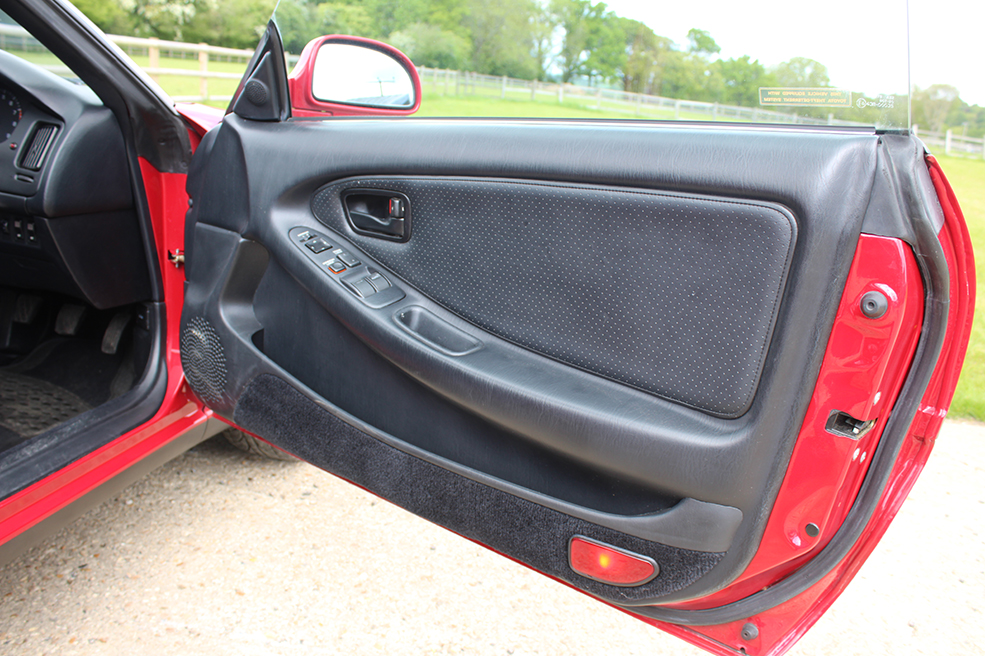
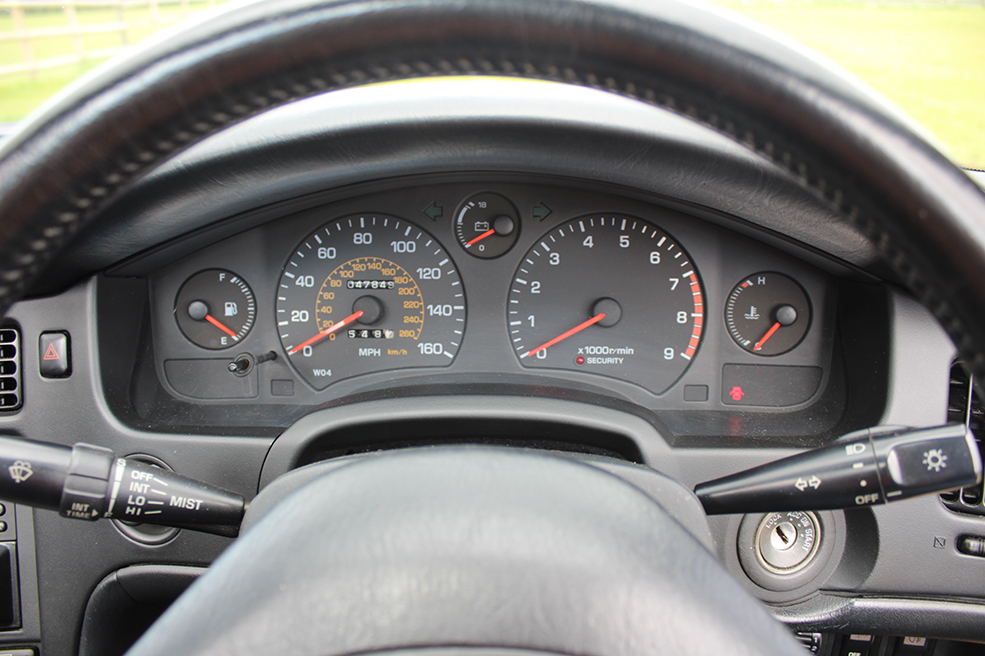
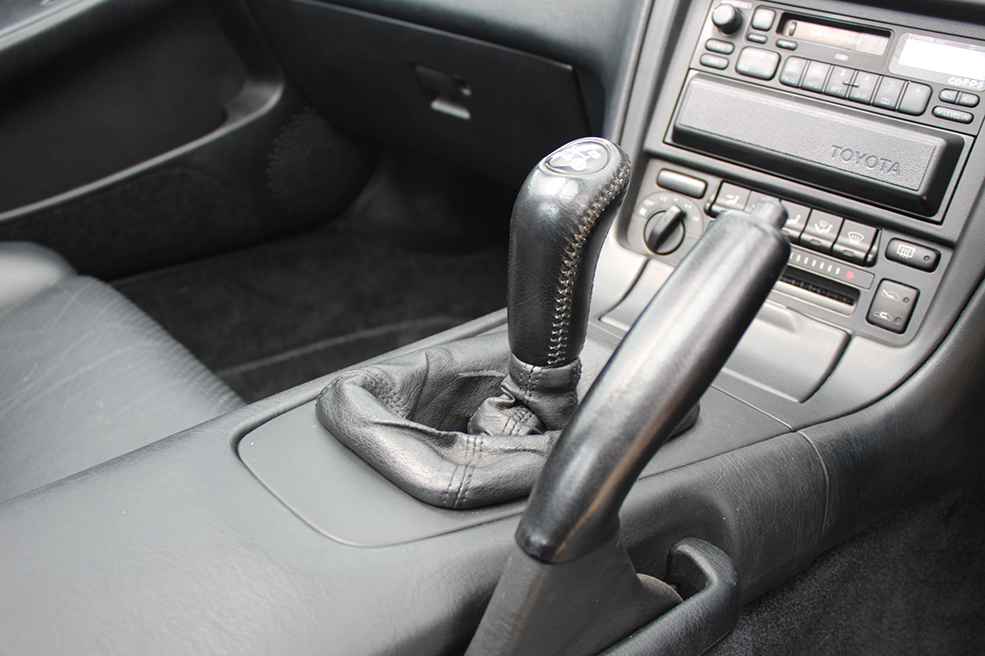
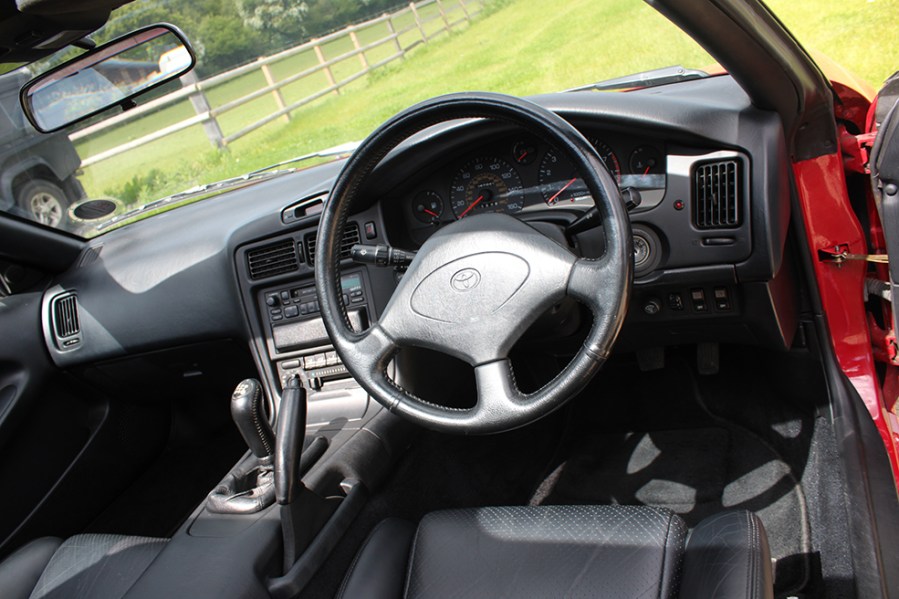
The cockpit-style cabin feels purposeful, while the large, clear instruments with their long sweeping needles add a sense of excitement. Like most Japanese cars of the 1990s, build quality is excellent, with the centre console, dashboard and door trim materials all standing up well over time. “Plastics can be brittle, and the leather gear gaiters are prone to wear, but they’re easy to replace,” notes Cox. Most parts for the MR2 come from the wider Toyota parts bin and remain readily available.
When inspecting a T-bar car, check for a standard sunshade, as the clips often break and replacements can be tricky to find. Vinyl bags for storing the glass panels are frequently missing as well. Across all MR2s, cloth seats offer a more ‘bucket’-like feel than leather or Alcantara, which can crack. The factory stereo is functional at best; optional ‘premium’ systems included a subwoofer behind the passenger seat. As the amplifiers were fitted behind the dash, cars with upgraded audio may have wires spliced into the factory loom.
Electrical systems are generally reliable, though Cox advises watching the power steering relays. “This is a known issue where the warning light comes on and the system loses steering assistance. A quick – if temporary – fix is to flick the ignition on and off a few times,” he explains.
Aside from the sunroof, most features were optional, but all cars were equipped with electric windows and mirrors and a heated rear screen. Japanese imports are also available, with G-Limited models offering leather, electrically folding door mirrors, and a rear spoiler. Turbos came in the lighter-spec GTS and GT trims.
Toyota MR2 Mk2 (SW20): our verdict
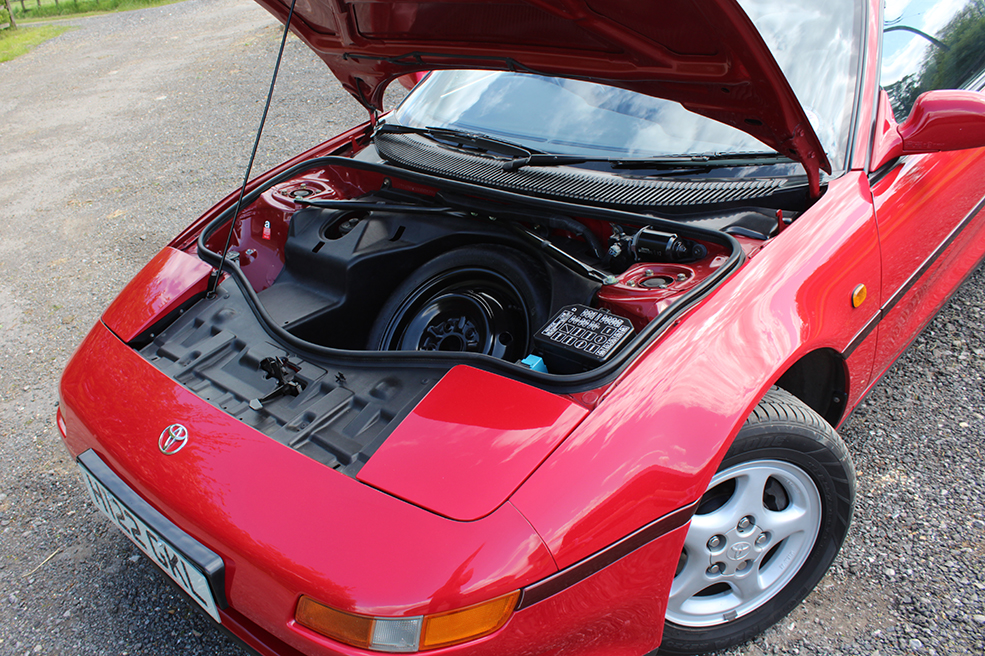
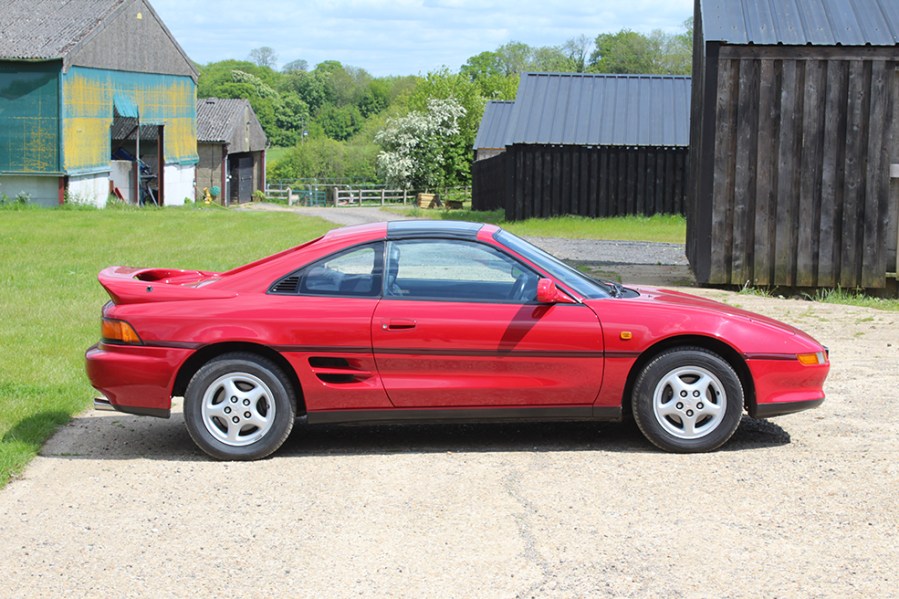
The SW20 MR2 is a modern classic that’s perfectly usable as a daily driver, offering composed handling, an excellent driving position, and a practical boot. It feels far more contemporary to drive than its age suggests, while its build quality and reliability make it a solid all-round choice. Equally at home tackling B-roads at the weekend or running errands during the week, the SW20 enjoys a strong following, with clubs including the MR2 Owners Club, International MR2 Owners Club, and the MR2 Drivers Club. Online communities such as mr2.ie and the MR2 section of toyotaownersclub.com are also invaluable resources.
Parts remain widely available, and specialists including MR2-BEN, TCB Parts, TB Developments, and Rogue Motorsport offer expertise across all aspects of ownership and tuning. For engine conversions or tricky wiring issues, Paul Woods of Woodsport is the go-to expert.
Toyota MR2 Mk2 (SW20) timeline
1989
‘SW20’ MR2 Mk 2 unveiled in 1989, replacing the ‘AW11’ Mk 1 on sale since 1984. New 119bhp and 158bhp 2.0-litre Toyota ‘S’-series engines with five-speed or four-speed automatic gearboxes. Turbocharged 225bhp model sold outside Europe.
1990
MR2 Mk 2 arrives in the UK in 119bhp MR2 and MR2 Auto, and 158bhp GT and GT T-Bar trims. Prices start at £14,000.68 for the MR2, rising to £16,650.50 for the GT T-Bar.
1992
First revisions see automatic models dropped from UK sale. Specification changes include clear front fog lamps, 15-inch alloys, speed-sensitive power steering, a lowered ride height and bigger brakes. Suspension geometry revisions to cure snap-oversteer.
1994
New 173bhp ‘3S-GE’ engine installed from the Celica GT replacing previous units; ABS added, along with exterior styling and interior revisions, side impact bars, and revised suspension. GT and GT T-Bar specifications only.
1996
Limited edition 10th Anniversary MR2 GT T-bar model introduced.
1999
Production of MR2 Mk 2 ends; European sales last until 2000.